Highlights
- Baby supply assistance programs are essential for supporting low-income families with newborn care.
- Collaboration between public and private entities enhances program effectiveness and resource distribution.
Overview of Baby Supply Assistance Programs
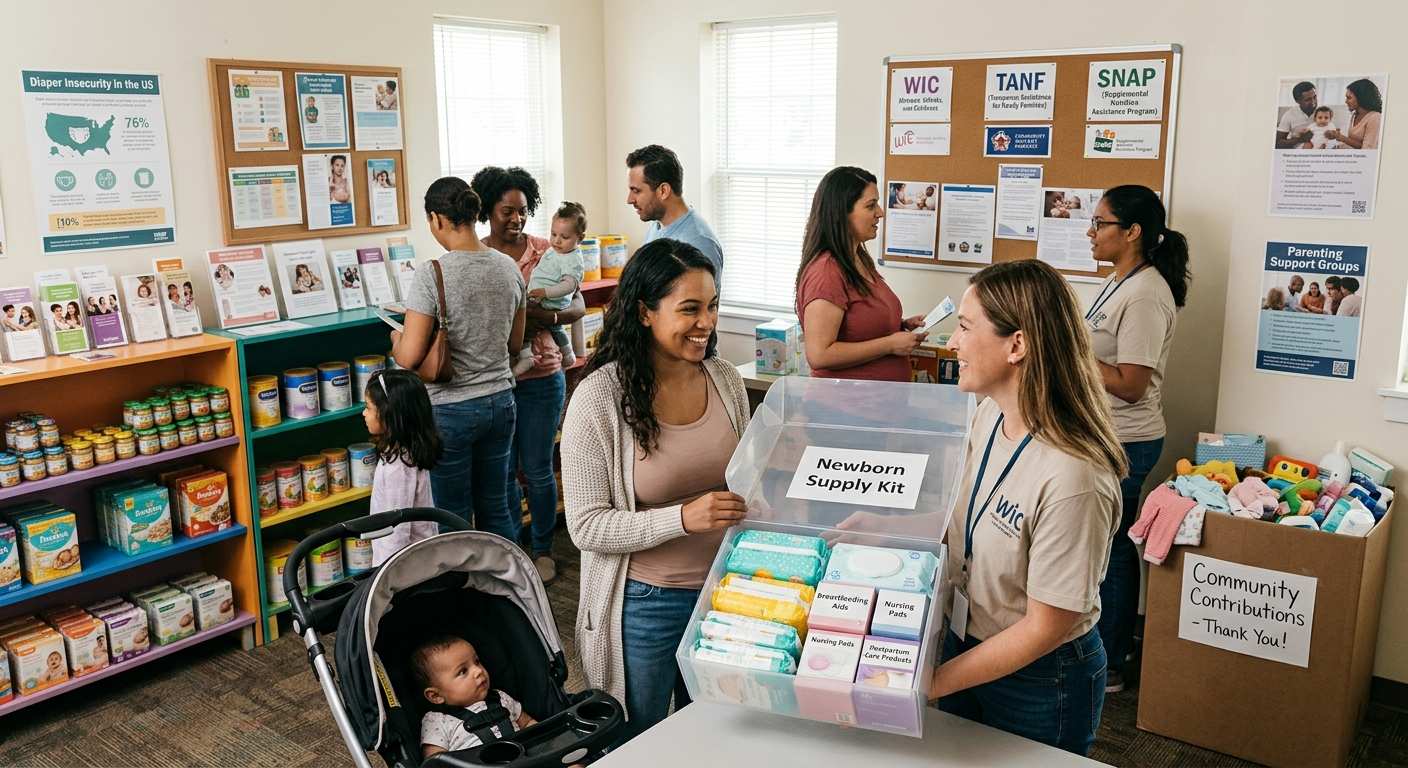
Baby supply assistance programs in the United States are critical for supporting families with essential items and resources necessary for newborn and maternal care. These initiatives, spanning federal, state, and nonprofit sectors, address financial strain faced by low-income households by providing items such as diapers, wipes, breastfeeding aids, postpartum care products, and nutritious foods. The Newborn Supply Kit Program and the Special Supplemental Nutrition Program for Women, Infants, and Children (WIC) exemplify these efforts, emphasizing health outcomes and food security for vulnerable families. However, challenges persist, including funding limitations and varying eligibility criteria across different programs.
Types and Functionality of Assistance Programs
Among the various baby supply assistance programs, the Newborn Supply Kit Program stands out as a notable initiative that exemplifies cooperation between the federal government and private organizations. This program provides essential newborn supplies at birth, aiming to reduce the stress and financial burden on new parents. Additionally, WIC serves as a key support mechanism, offering nutritious foods and education to low-income women, infants, and young children. Furthermore, programs such as Temporary Assistance for Needy Families (TANF) provide flexible cash benefits that families can allocate to purchase baby supplies, thus promoting financial autonomy alongside essential support.
Eligibility and Access Considerations
Eligibility for baby supply assistance programs generally requires meeting income thresholds and nutritional risk assessments. Applicants for programs like WIC must have household incomes at or below 185% of the Federal Poverty Guidelines, with specific program eligibility often focused on pregnant individuals or young children. Participation in other assistance programs, such as Medicaid or SNAP, can simplify the application process by providing adjunctive eligibility. However, since these criteria can vary significantly by state, it is advisable for families to consult local resources for accurate and up-to-date information regarding their qualification.
Impact and Effectiveness of Programs
Baby supply assistance programs positively impact maternal and child health by decreasing parental stress and enhancing the overall well-being of families in need. Evidence suggests that access to these programs influences health outcomes, such as improved nutrition and hygiene practices among mothers and infants. The integration of public-private partnerships notably increases program reach and effectiveness. Nevertheless, areas of concern include the lack of continuous monitoring metrics, especially for diaper banks, which play a vital role in addressing the needs of families facing diaper insecurity—a condition affecting a significant portion of American households.
Logistics and Distribution Challenges
Effective distribution and logistics management are essential for the success of baby supply assistance programs. These logistics involve careful planning, sourcing, and community-level partnerships to ensure that supplies timely reach families in need. Agencies often collaborate with nonprofits to streamline the distribution process, focusing on efficiency in service delivery. However, maintaining sustainable funding and operational support remains a challenge, necessitating a shared commitment from government bodies, private entities, and community organizations to enhance the effectiveness of these assistance programs.
The content is provided by Harper Eastwood, Scopewires