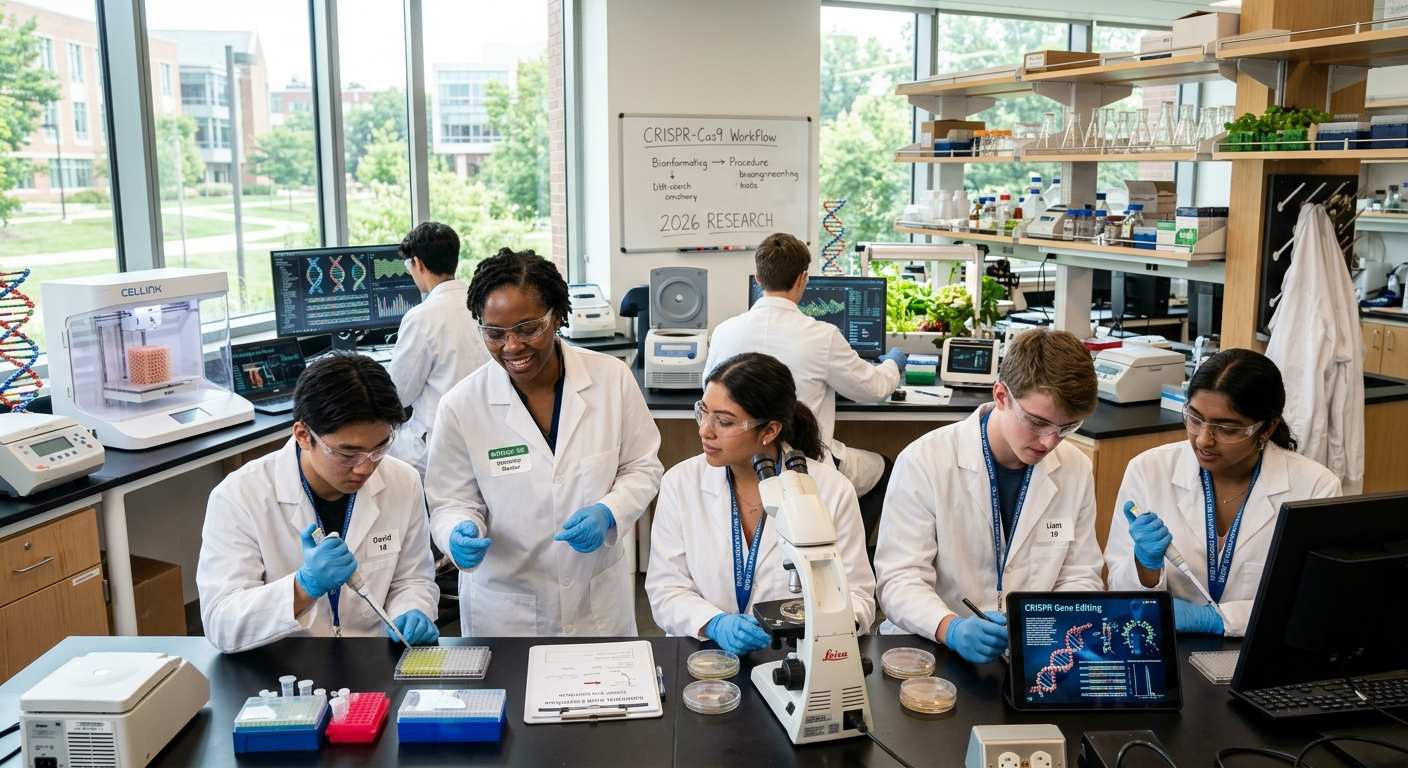
Biotechnology summer programmes can give students an opportunity to explore laboratory science before choosing a university course or career path. Depending on the programme, participants may study areas such as molecular biology, genetics, bioinformatics, drug development and biomedical research.
UK opportunities range from short university taster courses for school pupils to laboratory projects and research-focused programmes for undergraduates. Some are residential, while others are delivered as day programmes, online courses or a combination of formats. Imperial College London, for example, runs summer programmes that combine lectures, practical workshops, laboratory sessions and group projects.
What Types of Biotechnology Programmes Are Available?
The term “biotechnology summer programme” can cover several different types of opportunity.
| Programme type | What it may include |
| University summer school | Lectures, practical workshops and an introduction to university study |
| Laboratory programme | DNA analysis, microbiology, molecular biology or experimental techniques |
| Research placement | A supervised project within a university or research institute |
| Career taster course | Introductions to biotechnology careers, degrees and scientific workplaces |
| Online programme | Virtual teaching, group assignments and introductory biotechnology topics |
Students searching for biotechnology summer programmes in the UK should check the intended academic level carefully. A course designed for Year 12 pupils may not accept university students, while a research placement may only be open to undergraduates studying a relevant degree.
For example, some Cambridge summer schools are aimed specifically at Year 12 students from UK state schools, while the Gatsby Plant Science Summer School is intended for eligible undergraduate bioscience students.
What Could Students Learn?
The exact content varies, but biotechnology and biomedical summer courses may introduce students to topics such as:
- DNA extraction and analysis
- Genetics and genomics
- Molecular and cell biology
- Microbiology
- Bioinformatics
- Drug discovery
- Synthetic biology
- Laboratory safety
- Scientific data interpretation
- Research ethics
A 2026 UCL biomedical sciences summer school included laboratory sessions in microbiology, DNA extraction and genotyping. Imperial’s biotechnology courses also combine laboratory and computational work to develop experimental and data-analysis skills.
Not every programme provides full laboratory access. Online courses and shorter taster events may focus more on lectures, demonstrations, case studies and group challenges. Applicants should therefore check how much practical work is included before applying.
Who Can Apply?
Eligibility can differ considerably between programmes. Providers may consider:
- The applicant’s age or school year
- Current subjects and academic level
- Interest in biology, chemistry or related sciences
- UK residency or school type
- English-language ability
- Previous laboratory experience
- Availability for the full programme
- Whether accommodation is required
Some biomedical science summer schools in the UK are widening-participation programmes and may prioritise pupils from state schools or students who meet particular access criteria. Other courses accept international students but may charge fees and require proof of English-language ability.
Applicants should read the eligibility conditions before preparing an application. Meeting the general age requirement does not necessarily mean that every student will qualify.
What Does the Application Process Involve?
Applications may request a combination of:
- School or university details
- Recent academic results
- A personal statement
- A teacher or academic reference
- An explanation of the applicant’s interest in biotechnology
- Evidence of English proficiency
- Permission from a parent or guardian for younger applicants
Competitive programmes may ask students to explain what they hope to learn and how the opportunity connects with their future studies. A focused response is usually more useful than a general statement about enjoying science.
Students exploring biotechnology work experience for students should begin researching early. Application dates vary, and some programmes close once places have been allocated. Accommodation, travel arrangements and supporting documents may also require additional preparation.
Fees, Scholarships and Other Costs
Programme costs differ according to the provider, duration and format. Some university outreach programmes are free for eligible UK students, while residential and international summer schools may charge tuition and accommodation fees.
Before applying, check whether the advertised fee includes:
- Accommodation
- Meals
- Laboratory materials
- Social activities
- Local travel
- Insurance
- Certificates or academic credit
Scholarships or financial support may be available for selected courses. Imperial, for example, advertises scholarship opportunities for its biomedicine summer school, while other university access programmes are provided without charge to qualifying pupils.
Students should confirm the current cost directly with the programme provider rather than relying on a general national price estimate.
How to Compare Biotechnology Summer Programmes
The most expensive or longest programme is not automatically the best choice. Students should compare opportunities according to their own academic level and goals.
Important questions include:
- Is the programme suitable for school pupils or university students?
- How much laboratory work is included?
- Who delivers the teaching?
- Is there a supervised research project?
- Are accommodation and meals included?
- Is financial support available?
- Will participants receive feedback or a certificate?
- Does the programme relate to the student’s intended degree or career?
Students who are considering biotechnology beyond the summer may also compare biotechnology courses in the UK. University programmes can include laboratory work, computational analysis and specialist areas such as synthetic biology, metabolic engineering, drug design and biopharmaceuticals.
Can a Summer Programme Help With Future Studies?
A summer programme can help students understand whether they enjoy laboratory work, research and university-level science. It may also provide material to discuss in a personal statement or future interview.
Participation does not guarantee admission to a university or employment in biotechnology. Its value depends on what the student learns and how clearly they can explain the experience afterwards.
Students may find it useful to keep notes about:
- Techniques they observed or practised
- Scientific questions they investigated
- Challenges encountered during group work
- Areas of biotechnology they found most interesting
- Courses or careers they would like to explore next
Final Considerations
Biotechnology summer programmes can offer an accessible introduction to laboratory research, university study and science-related careers. However, programme content, eligibility, costs and practical experience vary significantly.
Before applying, students should compare several providers, confirm the entry requirements and check exactly what is included. The most suitable option will be one that matches the student’s current academic level while providing meaningful exposure to the areas of biotechnology they want to explore.
Programme availability, eligibility, dates and costs may change. Applicants should confirm current information directly with the relevant provider.
The content is provided by Sierra Knightley, Scopewires