Highlights
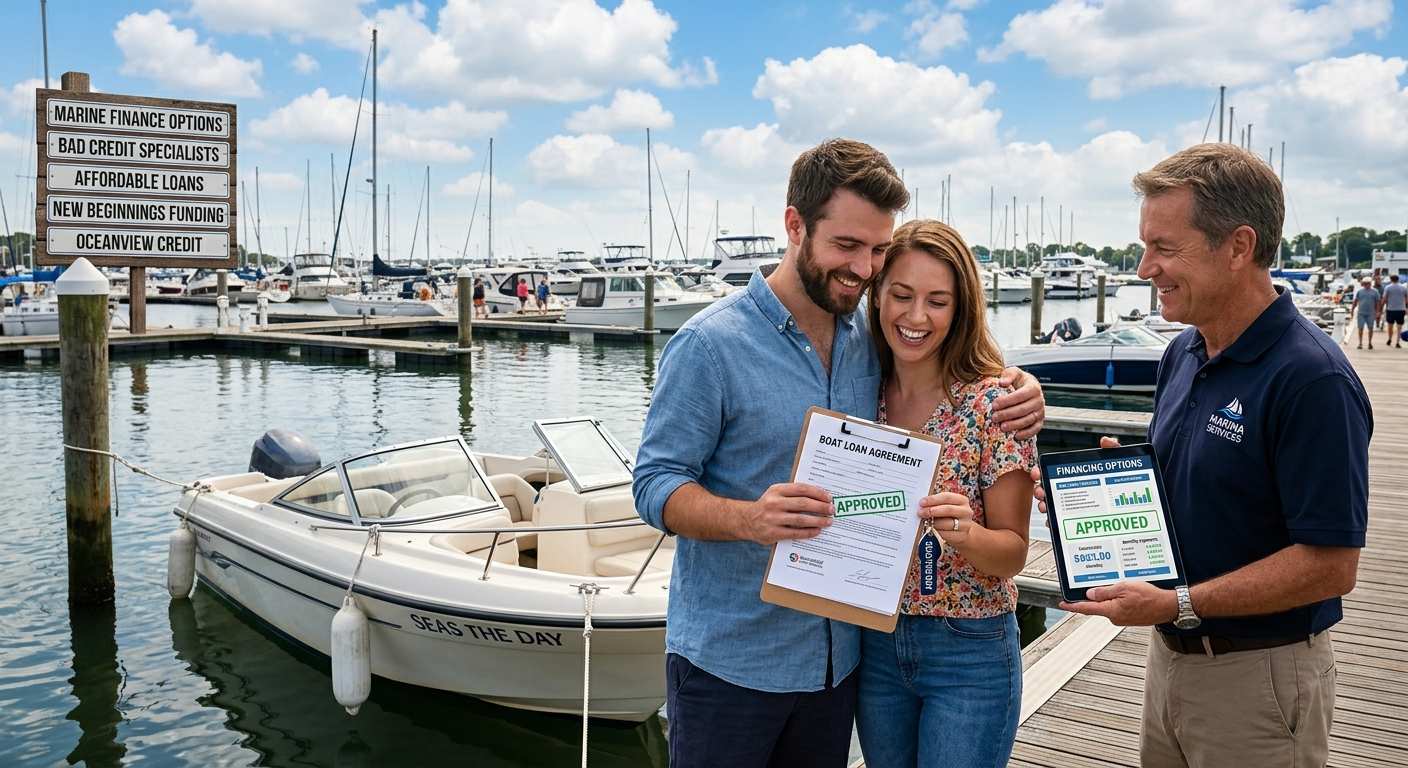
- Specialized lenders offer tailored boat financing options for individuals with bad credit.
- Strategic financial planning and collateral improve loan terms, making boat ownership attainable.
Boat Financing for Individuals with Bad Credit
Securing boat financing with a bad credit score presents significant challenges but is achievable through specialized lending options and strategic financial planning. Typically, a bad credit score is classified as below 580, affecting loan conditions such as larger down payments (often 20-30%) and elevated interest rates (ranging from 12% to over 18%). Various lenders, including banks, credit unions, and marine finance companies, offer products tailored to accommodate subprime borrowers.
Financing Options and Strategies
For borrowers with bad credit, secured loans are a common and accessible financing method as they use the boat as collateral, reducing lender risk. These loans typically require a down payment of 10% to 20%, though higher down payments can lead to better terms. In contrast, unsecured personal loans, while available, pose higher interest rates and stricter credit requirements, making them less favorable for subprime borrowers.
Alternative financing methods include peer-to-peer lending platforms that connect borrowers with investors for potentially flexible loan terms, and in-house financing options from dealers, though these may involve higher costs. Credit unions often provide more favorable terms compared to larger banks, focusing on member support. Engaging a co-signer with good credit can significantly enhance approval chances and reduce risks, benefiting both parties involved.
Challenges and Trade-Offs
While lenders offer financing options for bad credit borrowers, applicants face increased costs and stringent conditions. Necessary down payments can prohibit purchasing opportunities, and higher interest rates substantially raise overall loan costs. Additionally, lenders might require extensive documentation and consider the age and type of the boat, with new vessels generally qualifying for better rates. Borrowers need to navigate potential fees, state usury laws, and multiple credit inquiries that may impact credit scores.
Improving Approval Odds
To enhance their chances of securing favorable loan terms, borrowers should focus on improving their credit profiles, which includes paying down existing debts and ensuring timely payments. A strong and substantial down payment remains critical in reducing risk and securing better interest rates. Borrowers are advised to compare multiple lenders’ offers and should consider pre-qualification to gauge eligibility without affecting their credit scores. Additionally, taking proactive measures to correct credit report errors and maintain low debt-to-income ratios will further improve financing options.
Alternative Financing Considerations
Those with bad credit should also explore government-backed programs specifically designed to assist lower credit borrowers, offering lower interest rates and extended repayment terms. While application processes for such programs may involve more detailed documentation, the potential benefits can be substantial. Engaging in thorough research of both traditional and alternative financing avenues is crucial for borrowers aiming for boat ownership despite credit challenges, ensuring they secure manageable loan arrangements aligned with their financial capabilities.
The content is provided by Blake Sterling, Scopewires