
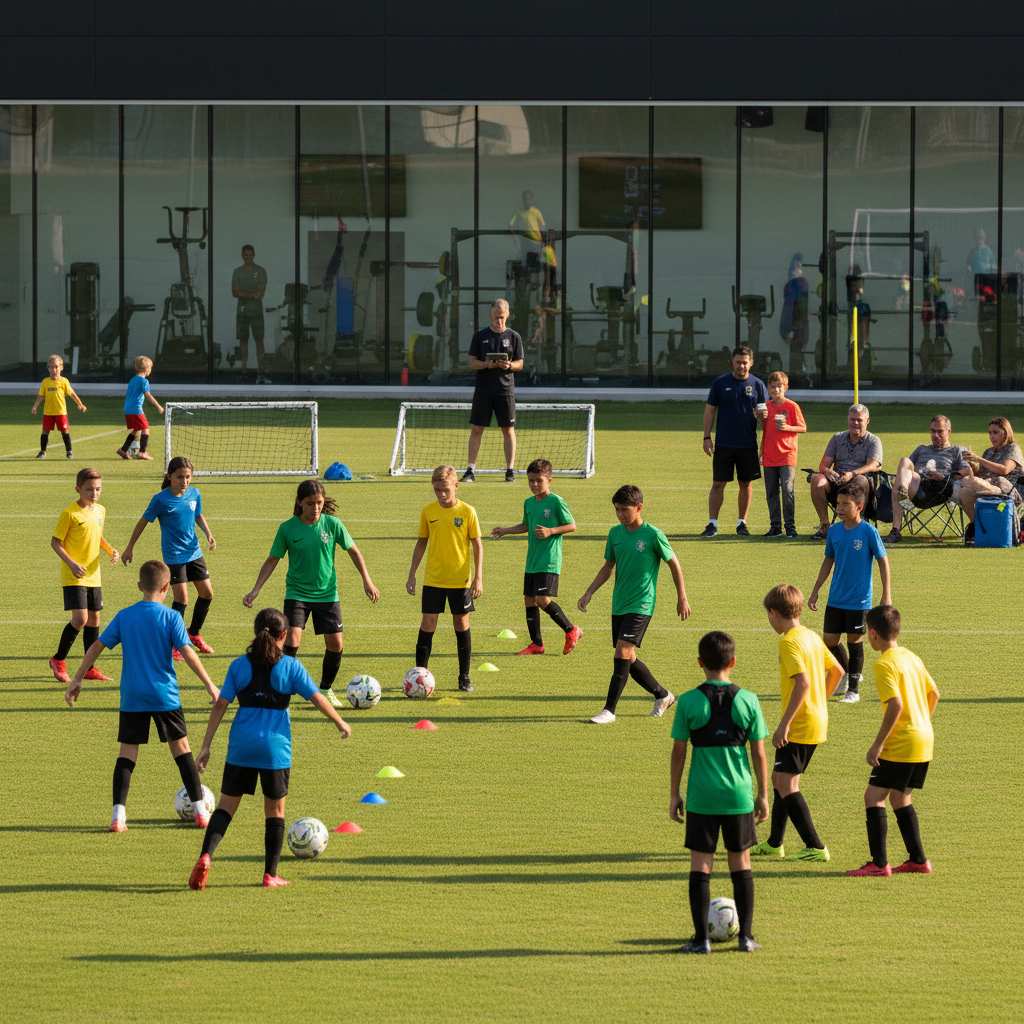
Highlights
- The rise of U.S. soccer academies is transforming young athletes into elite players.
- Embracing holistic development and technology is crucial for the future of U.S. soccer.
Summary
The development of soccer academies in the United States has played a pivotal role in nurturing the country’s growing pool of soccer talent, reflecting the sport’s rising popularity and the increasing ambition to compete at the highest international levels. Since the establishment of the U.S. Soccer Development Academy (DA) in 2007, and its subsequent replacement by MLS NEXT in 2020, the American youth soccer landscape has evolved into a complex system of elite training environments designed to develop technically skilled, tactically astute, and ethically grounded players. These academies blend rigorous athletic training with academic support, creating pathways that lead many aspiring players to collegiate scholarships and professional careers.
Among the most notable academies are IMG Academy, Philadelphia Union Academy, FC Dallas Academy, and the Barça Residency Academy, each recognized for their state-of-the-art facilities, expert coaching staffs, and commitment to player development. These institutions emphasize a possession-oriented style of play and foster a professional culture that prioritizes individual growth over short-term team success. The integration of advanced sports performance technology and coaching licensure standards further supports these goals.
Despite these advances, U.S. soccer academies face significant challenges, particularly concerning the commercialization of youth soccer and issues of accessibility. The pay-to-play model, soaring participation costs, and limited availability of unstructured play spaces in many communities have raised concerns about socio-economic disparities and the inclusivity of the sport. Critics argue that this environment can hinder equitable talent identification and development, potentially restricting opportunities for gifted players from underprivileged backgrounds.
Looking forward, U.S. soccer academies continue to innovate by embracing holistic player development and leveraging technological advancements to optimize training. Collaborations between national governing bodies and local clubs seek to streamline player pathways and retain talent domestically. As the youth soccer system matures, these efforts aim to balance commercial interests with sustainable grassroots growth, addressing long-standing structural issues to enhance the United States’ competitiveness on the global soccer stage.
History and Evolution of Soccer Academies in the USA
The development of soccer academies in the United States has undergone significant transformation over the past few decades, reflecting both the growing popularity of the sport and the desire to produce world-class talent domestically. A pivotal moment came in 2007 when the U.S. Soccer Federation (USSF) launched the U.S. Soccer Development Academy (DA) after conducting a comprehensive review of elite player development across the country. This initiative aimed to create a structured, high-performance environment that emphasized quality training and competitive matches rather than merely increasing the number of games played. The DA was established as a partnership between U.S. Soccer and top-level clubs nationwide, with the ultimate goal of nurturing elite youth players capable of competing on the global stage.
The DA introduced a professionalized approach to youth soccer, focusing on creating daily environments that combined training, education, and competition, designed to develop not only skilled players but also committed and ethical individuals. This model encouraged clubs to expose young athletes to a high-performance culture early on, fostering the values and mindsets needed for success internationally.
Despite its successes, the youth soccer landscape has faced challenges. The rise of youth soccer as a commercial enterprise led to increased player fees, tournament costs, and lucrative sponsorship deals with major brands like Nike, Adidas, and Under Armour, turning the youth soccer system into a significant business entity. This commercialization sometimes overshadowed efforts to build a sustainable grassroots soccer culture and posed questions about the inclusivity and accessibility of the sport for all communities in the U.S..
After the dissolution of the Development Academy in 2020, Major League Soccer (MLS) introduced MLS NEXT, an elite youth development platform serving boys ages U13 to U19. MLS NEXT continues the mission of providing top-tier competition, extensive college recruiting exposure, and professional scouting opportunities, thereby sustaining a clear pathway from youth academies to professional soccer careers.
Throughout this evolution, top soccer academies such as IMG Academy in Bradenton, Florida, have played a prominent role. IMG is renowned for its elite boarding school model that combines high-level training facilities with academic support, consistently producing athletes who earn NCAA scholarships or turn professional. Additionally, MLS academies have been rigorously evaluated and ranked based on talent levels, success in player development, progression through professional pathways, and available resources, underscoring the competitive and dynamic nature of soccer academies in the U.S..
Structure and Accessibility of Youth Soccer Development
Youth soccer in the United States is characterized by a fragmented and complex structure, consisting of multiple governing bodies, leagues, and competition levels that vary widely depending on region, age group, and gender. Unlike more unified systems seen internationally, U.S. youth soccer includes a broad spectrum of programs ranging from recreational organizations such as AYSO to elite professional academies, with participation costs varying dramatically—from as low as $200 per year to upwards of $10,000 or more.
At the regional level, eleven administrators serve as key connectors between academy directors and U.S. Soccer, overseeing talent identification networks aimed at integrating promising players into the National Team system. This structure prioritizes meaningful competition and emphasizes training, with clubs typically required to conduct training sessions at least four days a week during the season to promote individual player development. However, despite this organized approach, there is little conclusive evidence that extreme or overly competitive youth environments necessarily produce better players; some studies even suggest the opposite, highlighting the need for balanced development rather than purely competitive focus.
Accessibility remains a significant challenge within the U.S. youth soccer landscape. Socio-economic disparities limit many children’s ability to participate, especially in urban areas where the lack of available fields and resources for unstructured play is acute. In many cases, local fields are monopolized by clubs that rent the space, further restricting opportunities for informal play and development among lower-income communities. The commercialized nature of American youth soccer, driven by broader U.S. sports culture and business models, exacerbates these barriers by creating a system where access is often contingent upon financial resources. This commercialization, while generating substantial investment in infrastructure, coaching, and programming, also raises ethical concerns about equity and inclusivity within the sport.
Nonetheless, partnerships between academies and governing bodies have introduced high-performance cultures aimed at nurturing not only skilled athletes but also committed and ethical individuals. These environments expose young players to professional standards early on, fostering values that extend beyond athletic development. Additionally, many top academies emphasize the integration of academic education with athletic training, ensuring a holistic development model that balances sport with schooling.
Criteria for Evaluating Soccer Academies
Evaluating soccer academies in the United States involves multiple factors that collectively determine the quality of player development and overall experience. One of the primary considerations is the type of training programs offered, which can range from short-term intensive camps to comprehensive annual cycles that include academic preparation such as high school or university-level coursework. Flexibility in program duration and the availability of scholarship opportunities also play an important role in accessibility and player development pathways.
Another critical factor is the quality and philosophy of coaching staff. Successful academies emphasize coaches as teachers and motivators who not only develop technical skills but also foster creativity and tactical understanding. For younger age groups (U8-U12), coaches are expected to be positive role models and team builders, while coaches for older teams must understand the physical demands of the modern game and be adept at reading game details. The overarching training philosophy often prioritizes an attractive, possession-oriented style of play that encourages skillful and thoughtful players, alongside a defensive mentality focused on pressing and winning the ball back.
The infrastructure and facilities of an academy are also vital criteria. State-of-the-art complexes, such as those featuring multiple turf and grass fields, indoor pitches meeting FIFA regulations, and dedicated performance centers, provide players with the environment needed for year-round training and development. High investment in such facilities often correlates with a club’s commitment to fostering elite talent.
Additionally, the academy’s approach to scouting and player recruitment significantly influences its success. Academies with a broad and effective scouting network tend to build stronger talent pools, while those relying on narrow player profiles or limited local talent pools may face challenges in producing first-team prospects. Integration with national talent identification systems, including regional administrators who connect academies with U.S. Soccer, helps in identifying and developing players capable of advancing to national team levels.
Finally, the balance between commercial interests and grassroots development is an increasingly important consideration. While the growth of American soccer as a commercial enterprise has expanded resources and opportunities, some academies and leagues struggle to maintain sustainable development pathways that serve diverse communities and foster long-term soccer culture. A strong academy will seek to harmonize commercial viability with ethical and practical talent development.
Leading Soccer Academies in the USA
The United States hosts several elite soccer academies that are recognized for their outstanding player development, state-of-the-art facilities, and comprehensive training programs. These academies not only focus on athletic excellence but also emphasize academic education, preparing athletes for both professional careers and collegiate opportunities.
Philadelphia Union Academy
The Philadelphia Union Academy, based in Chester, Pennsylvania, is frequently ranked as the top MLS academy in the nation. It has a proven track record of producing high-level prospects, with 29 Homegrown players advancing to the Philadelphia Union first team and 10 more joining Union II. Notable alumni include U.S. Olympians Nathan Harriel and Jack McGlynn, as well as USMNT players Brendan Aaronson, Paxten Aaronson, and Mark McKenzie. The academy benefits from excellent development infrastructure and maximizes its MLS Next Pro team to provide meaningful playing time and progression opportunities for young talents. Many graduates also excel in collegiate soccer at prestigious universities, showcasing the academy’s commitment to both athletic and academic success.
IMG Academy
Located in Bradenton, Florida, IMG Academy is widely regarded as one of the premier sports education institutions in the country. It offers an elite boarding school environment with top-tier training facilities, including 16 grass fields dedicated to soccer, a high-performance center, and extensive academic resources. The academy integrates a rigorous academic curriculum alongside intensive sports training, ensuring a well-rounded development for student-athletes. Personalized training programs cater to the specific needs and strengths of each athlete, enhancing individual growth and performance. Hundreds of IMG Academy’s soccer student-athletes have earned NCAA scholarships or advanced to professional careers, underscoring the effectiveness of its comprehensive approach.
Barça Residency Academy
The Barça Residency Academy in Casa Grande, Arizona, represents the official FC Barcelona high-performance academy in the United States. It follows the renowned La Masía training philosophy, emphasizing technical skills, tactical awareness, and a possession-based style of play. The academy offers a boarding school environment combined with strong pathways to collegiate soccer and professional opportunities. This program stands out for its commitment to replicating Barcelona’s globally respected development methods, making it a significant contributor to the growth of soccer talent in the USA.
FC Dallas Academy
FC Dallas Academy in Frisco, Texas, is known as a powerhouse in youth development within the U.S. soccer landscape. It boasts world-class facilities and a history of producing professional-level players such as Ricardo Pepi, Jesús Ferreira, Jesse Gonzalez, Emerson Hyndman, Weston McKennie, and Paxton Pomykal. The academy dominates youth leagues and integrates many of its academy players into the first team, exemplified by Victor Ulloa’s record-setting minutes played in the 2014 season. FC Dallas’s model has set a benchmark for other American clubs aspiring to replicate its success in talent development and first-team integration.
Other MLS Academies
While academies like the Portland Timbers, Houston Dynamo, and Sporting Kansas City have made strides in youth development, challenges remain in fully bridging the gap between academy, second team, and first team. The Timbers, for example, benefit from strong infrastructure and committed coaching staff but have experienced slower progress due to limited senior leadership support. Similarly, the Dynamo have improved in leveraging local talent and their second team but face hurdles in transitioning prospects to the first team consistently. D.C. United continues to work on strengthening local relationships and pathways for homegrown players despite historical challenges. These academies remain crucial contributors to the evolving landscape of U.S. soccer development.
These academies collectively demonstrate the growing sophistication and competitiveness of youth soccer development in the United States, balancing athletic excellence with academic achievement to prepare the next generation of professional and collegiate players.
Player Experience in Different Academy Models
Youth soccer academies in the United States vary widely in terms of resources, philosophy, and player experience, shaping the developmental opportunities available to aspiring players. At the top tier, well-resourced academies often provide world-class facilities, expert coaching staff, and clear pathways to professional careers, creating an environment focused on individual player growth and long-term success. These academies typically emphasize a possession-oriented, skillful, and creative style of play, encouraging players to develop thoughtful decision-making on the field while maintaining a strong defensive mindset centered on pressing and winning back possession.
The U.S. Soccer Development Academy, established in 2007, exemplifies an elite model prioritizing increased training time, fewer but more meaningful games following international competition standards, and the individual development of elite players over the pursuit of trophies. Such programs often feature a streamlined pathway allowing for flexibility in player movement between age groups and rosters, supporting a smoother transition as players advance from formats like 9v9 to the traditional 11v11 game. Additionally, academy schedules may incorporate divisional league play, futsal training, and regional showcases to broaden player experience and exposure.
In contrast, some academies with fewer resources struggle to provide up-to-date facilities or access to specialized coaching, which can limit the developmental impact on players and sometimes prioritize team success over individual progression. Furthermore, socioeconomic disparities influence player access and experience, as many urban areas face challenges related to the availability of unstructured play spaces and the affordability of club fees, equipment, and travel costs—factors that continue to widen the gap in youth soccer participation and development.
Beyond the traditional club academy model, there are also short-term and residency programs, such as those offered by IMG Academy, which provide intensive training experiences lasting up to two weeks or longer, targeting players aged 9 to 18 across all positions. These programs focus on holistic development, balancing athletic, academic, and personal growth to prepare student-athletes for success both on and off the field. Similarly, emerging academies with ambitious infrastructure plans aim to combine world-class training environments with comprehensive support systems, signaling a growing trend toward more integrated and resource-rich player development models.
Coaching Philosophy and Training Methodologies
The coaching philosophy adopted by leading U.S. soccer academies emphasizes an attractive, attacking style of play designed to cultivate skillful, thoughtful players. This approach prioritizes skillfulness, creativity, and possession-oriented tactics, while defensively promoting a high-press and “win it back” mentality. Coaches are viewed primarily as teachers, with those working with younger age groups (U8-U12) focusing on demonstration, positive influence, and team building. In contrast, coaches for older teams serve as motivators who understand the physical demands of modern soccer and can interpret the nuanced details of match play.
Training methodologies within these academies are rigorous and professionalized. Clubs mandate a minimum of four training sessions per week during the season to prioritize individual development over the quantity of games played. Coaches are required to hold U.S. Soccer coaching licenses, with Academy coaches needing at least a “B” license and Academy Directors an “A” license. The training environment incorporates advanced sports performance technologies such as video analysis, performance-based player testing, and perceptual-cognitive training, providing players with cutting-edge developmental tools.
In addition to technical and tactical development, some academies emphasize holistic growth, fostering emotional and social skills like respect, responsibility, and perseverance. Facilities are designed with player safety and optimal development in mind, and reputation and references are carefully considered to ensure a positive training environment. This comprehensive approach supports player pathways at all levels, recognizing that any positive engagement with the sport—from grassroots to professional—is valuable for players, coaches, and referees alike
Infrastructure and Facilities Supporting Player Development
The development of elite soccer players in the United States is strongly supported by state-of-the-art infrastructure and comprehensive facilities offered by top soccer academies. These facilities are designed to create an environment conducive to both athletic and personal growth, integrating advanced training technologies, educational support, and holistic player care.
Many academies utilize high-tech training tools such as video analysis and individualized development plans that focus on both physical and mental conditioning to optimize player performance. For example, FC Dallas Academy operates out of the Toyota Soccer Center sports complex, which features multiple training fields and a first-division stadium, fostering a highly competitive atmosphere aligned with professional standards. This environment has contributed to the development of players like Ricardo Pepi and Jesús Ferreira, who exemplify the academy’s emphasis on possession play and spatial awareness on the pitch.
Similarly, the Barça Residency Academy in Casa Grande, Arizona, is situated within Grande Sports World, a premier sports campus that offers extensive resources including on-site dormitories, eight soccer fields, professional nutritional programming, and a 58,000 square foot athletic training facility. This full-time residential program integrates rigorous academic support through Arizona State University Preparatory Academy alongside professional-level soccer training, providing a fully immersive lifestyle where players can live, learn, and train together. The facility has been recognized as one of the best training environments in the country.
In addition to physical facilities, academies prioritize access to recovery tools such as ice baths and therapy sessions, as well as well-maintained fields and cutting-edge fitness equipment, all essential for sustaining high performance and preventing injuries. Recognizing that not every player will progress to professional levels, these institutions also emphasize the importance of balancing academics and sports, ensuring players receive a strong education alongside their athletic development.
Other notable programs such as IMG Academy in Bradenton, Florida, and Philadelphia Union Academy in Chester, Pennsylvania, also provide elite boarding school environments with top-tier training facilities and academic support. These academies boast strong track records in producing NCAA scholarship recipients and professional players, supported by excellent infrastructure that nurtures player growth at all levels.
Program Structure and Player Pathways to Professional Careers
Youth soccer academies in the United States are designed to develop players through structured programs that emphasize skill development, tactical understanding, and holistic growth. The training philosophy across many academies focuses on an attractive, possession-oriented style of play that encourages creativity and thoughtful decision-making on the field, alongside a defensive mentality centered on pressing and regaining possession quickly. Coaches within these environments are regarded primarily as teachers, fostering an environment conducive to both athletic and personal growth.
Academies tailor their programs to accommodate different age groups and skill levels, ensuring that each player receives appropriate challenges to promote continuous development. For instance, many clubs implement training/game/rest ratios optimized to enhance player performance and recovery, a shift that has been increasingly emphasized since the late 2000s. The utilization of cutting-edge sports performance technology, including video analysis, perceptual-cognitive training, and performance-based testing, further supports the development of players within these academies.
Professionalization of coaching staff is a critical component of the academy infrastructure. All academy coaches are typically required to hold at least a U.S. Soccer “B” coaching license, while Academy Directors must possess an “A” license, ensuring a high standard of coaching quality and consistency across clubs. This professional environment is reinforced by connections to pro leagues, which help maintain frequent fan engagement and commercial growth that indirectly benefits player, coach, and referee development nationwide.
Player pathways within these academies are designed to guide talented individuals toward professional careers while supporting diverse routes depending on individual goals. While some players may sign professional contracts directly from academy systems, the majority pursue collegiate soccer as a stepping stone, often earning scholarships to top-tier university programs where they continue their development before turning professional. By around the U-13 age group, players who demonstrate elite potential are encouraged to join high-level local clubs or transition into pre-MLS academy programs, which act as feeders into professional clubs’ youth systems. These pathways include MLS Next academies, boutique performance academies, and top-tier clubs in leagues such as the Elite Clubs National League (ECNL), all of which provide structured environments focused on consistent training, high-level competition, and individualized development plans.
The U.S. Soccer Development Academy (DA), established in 2007, was a significant initiative aimed at connecting national team coaches with elite youth players and providing advanced coaching and referee education. The DA emphasized increased training quality and competitive matches over quantity, with programming that spanned multiple youth age groups and included both boys’ and girls’ development academies. Although the DA has since been replaced by new development initiatives, its foundational principles continue to influence current academy structures and player development pathways.
Notable Alumni and Their Development Journeys
IMG Academy stands out as a premier institution for nurturing soccer talent, boasting an impressive list of alumni who have excelled both academically and athletically. During the 2024-25 academic year, IMG Academy highlighted the success of its student-athletes, with a continued emphasis on holistic development that prepares players to excel beyond their collegiate careers and into professional sports and life.
Several alumni have made significant strides in their soccer careers. Notably, forty-four former IMG players competed in the NCAA Soccer Championships, with Trinity Armstrong (class of 2024) from the University of North Carolina and Alex Zedlitz (class of 2023) from Lynn University each securing the 2025 NCAA Soccer National Championship title. Additionally, former players Mia Justus (class of 2021) and Michelle Cooper (class of 2021) were invited to the U.S. Women’s National Team camp, with Cooper making her debut and joining fellow alumni Indiana Vassilev (class of 2018) and Shaq Moore (class of 2011) on the national team roster. The academy also produced tennis talent such as Sebastian Korda (class of 2018), who reached a career-high ATP singles ranking of World No. 28, demonstrating the institution’s broader impact on athlete development.
The development journeys of these athletes often begin with exposure to high-level training programs offered at IMG Academy, including short-term camps and long-term academy experiences for players aged 9 to 18. This structure allows players to progressively refine their skills across all positions, including goalkeepers, under expert coaching and access to top-tier facilities.
Beyond IMG Academy, pathways to professional soccer in the United States often involve transitions to elite youth academies such as MLS Next and other top-tier clubs that provide structured environments, individualized development plans, and competitive opportunities to groom talent for professional levels. Relationships between IMG and MLS Next Youth Academies facilitate meaningful competition and offer players avenues to pursue careers at the highest levels of American soccer.
Furthermore, the collaboration between U.S. Soccer and local clubs has enhanced these development pathways by providing consistent and clear trajectories for young talents from grassroots soccer to professional ranks. Diverse routes for player advancement include club referrals, regional leagues, showcases, and international transitions, reflecting the multifaceted nature of athlete development in the U.S. soccer landscape.
Together, these elements illustrate how notable alumni navigate their development journeys, leveraging premier training environments and collaborative networks to reach elite levels in their soccer careers.
Scholarships, Financial Aid, and Accessibility
U.S. Soccer has taken significant steps to reduce the financial barriers commonly associated with youth soccer by implementing scholarship programs through its Academy system. Since 2008, the Federation has awarded over two million dollars in scholarship funds to more than 1,500 Academy players, enabling increased access to elite-level youth soccer across the nation. This initiative aims to counteract the prevalent pay-to-play model that often limits opportunities for talented players from lower socio-economic backgrounds.
Despite these efforts, financial challenges remain a critical concern within the youth soccer ecosystem. The socio-economic divide continues to affect player development, especially in urban areas where access to unstructured play spaces is limited and fields are often monopolized by clubs renting the facilities. These structural issues represent market failures that not only hinder equitable access but also raise ethical questions regarding talent identification and nurturing.
To address accessibility beyond financial aid, some academies have integrated academic programs that emphasize balancing education with athletic training. For example, the Union Academy in Pennsylvania offers pathways such as admittance to the YSC Academy, a world-class soccer training and college preparatory school operating in alliance with the Union Academy. Additionally, soccer academies provide flexible study options, ranging from short-term programs to full annual cycles, coupled with scholarship opportunities and exposure to university coaches and scouts, thus supporting both academic and professional development.
Impact on the American Soccer Landscape
The growth of youth soccer in the United States has significantly transformed the American soccer landscape, both commercially and culturally. The shift from traditional community-based recreation programs to a highly commercialized enterprise has generated substantial market growth, fueled by tournaments, player fees, sponsorship deals with major brands such as Nike, Adidas, and Under Armour, as well as apparel and uniform sales. This evolution has turned youth soccer into a conglomerate rivaling medium-sized businesses, marking a departure from the simpler club structures common in the 1990s.
While this commercial expansion has brought increased exposure and professional opportunities, it has also introduced challenges regarding accessibility and inclusivity. The complex and fragmented nature of the U.S. youth soccer system—characterized by various governing bodies, leagues, and competition levels that differ regionally and by age and gender—complicates the path for many aspiring players. Financial barriers ranging from modest fees to commitments exceeding $10,000 can limit participation and risk overshadowing efforts to cultivate a diverse and sustainable soccer culture across the country.
Moreover, the commercial focus sometimes detracts from developing a cohesive system capable of producing international success. The United States’ historical underperformance in major global tournaments underscores deeper structural issues within youth development programs and the broader soccer ecosystem. Nonetheless, the introduction of high-performance cultures through strategic partnerships and revamped coaching curricula has enhanced player development. These initiatives emphasize not only skill acquisition but also the fostering of committed, ethical athletes prepared to compete on the world stage.
Challenges and Criticisms
Youth soccer development in the United States faces a complex set of challenges that hinder consistent success on both national and international stages. One significant issue lies in the commercialization of the sport, which diverges from soccer’s traditional global accessibility. The American system is heavily influenced by business interests, often limiting access for players who lack financial resources. This commercial model, while generating substantial investment in infrastructure, coaching, and youth programming, creates structural inefficiencies and ethical concerns by restricting opportunities for many talented players.
Another major criticism concerns the socioeconomic disparities within youth soccer. The growing gap between those who can afford participation and those who cannot is exacerbated in urban areas where even access to unstructured play spaces is limited. Organized clubs often rent out available fields, reducing informal playtime that is crucial for developing creativity and problem-solving skills with the ball. This overemphasis on formal leagues and tournaments is seen as replacing the essential “messy hours” of play that foster true talent development.
The overall organizational structure of youth soccer in the United States has also been a longstanding source of difficulty. The lack of a clear and unified pathway from youth soccer to the professional ranks creates confusion and uncertainty for aspiring players. Unlike many European models where clubs function as both community hubs and professional development centers, the American system’s fragmented nature complicates the transition to higher levels of competition.
Despite these challenges, efforts to improve collaboration between the national governing body, US Soccer, and local club academies have shown promise. Such partnerships aim to provide clearer development pathways and more consistent support for young athletes aspiring to reach professional levels. Additionally, US Soccer promotes inclusivity by supporting players, coaches, and referees across all ages and skill levels, emphasizing that any positive engagement with the sport—whether grassroots, high school, or adult leagues—is valuable. Nonetheless, the ongoing socioeconomic and structural challenges continue to provoke debate about the future direction of youth soccer development in the United States.
Future Trends and Innovations in Soccer Academies
The future of soccer academies in the United States is marked by an increasing emphasis on professionalization, advanced technology, and holistic player development. One significant trend is the growing collaboration between U.S. Soccer and local clubs, which has streamlined the pathway for young talents from grassroots levels to professional ranks, ensuring a clearer and more consistent development trajectory. This integration helps to foster talent retention within the country, reducing the migration of top prospects to overseas academies.
Academies are adopting a more scientific approach to player development, incorporating cutting-edge sports performance technology such as video analysis, performance-based testing, and perceptual-cognitive training. These innovations provide players with tailored feedback and developmental environments that optimize their growth and readiness for professional competition. Additionally, the professionalization of coaching staff continues to advance, with all academy coaches required to hold at least a U.S. Soccer “B” coaching license and academy directors mandated to possess an “A” license. This ensures high standards in training methodology and club leadership.
Another emerging trend is the focus on holistic development, which balances athletic training with academic achievement and life skills. Institutions like IMG Academy exemplify this approach by preparing student-athletes not only for collegiate and professional soccer careers but also for success beyond sports. This shift addresses concerns about prioritizing individual progression over short-term team success, particularly in lower-resourced academies that may lack modern facilities or specialized staff.
Residency programs and infrastructure investments are on the rise, with academies such as San Diego Football Club (SDFC) developing world-class facilities to attract and nurture elite talent domestically. At the same time, the acceptance of foreign players into U.S. academies reflects a diversification of pathways, though this process remains complex and less standardized. Players may transition from overseas academies to MLS Next youth academies through various routes, including club referrals, regional leagues, and showcase events.
The content is provided by Harper Eastwood, Scopewires


