Highlights
- Smart home security cameras enhance safety with advanced technologies like AI and motion detection.
- Adoption of these cameras significantly reduces crime rates while raising important privacy considerations.
Summary
Home security cameras have become an essential component of modern residential safety, offering homeowners unprecedented protection through advanced surveillance technology. Originating from rudimentary monitoring systems in the late 19th and early 20th centuries, these devices have evolved into sophisticated smart cameras equipped with features such as high-definition video, two-way audio, motion detection, and artificial intelligence (AI) integration. The widespread adoption of smart home ecosystems and increasing consumer demand for convenient, real-time monitoring have further accelerated their development and market growth.
These cameras come in various forms—including wireless, doorbell, and floodlight models—each designed to meet diverse security needs and installation preferences. Innovations like AI-powered activity recognition and customizable detection zones enhance the accuracy and relevance of alerts, reducing false notifications and enabling proactive responses to potential threats. Moreover, integration with voice assistants and mobile applications allows homeowners to interact with and control their security systems remotely, improving both usability and effectiveness.
The effectiveness of home security cameras in deterring crime is well documented, with studies showing significant reductions in burglary and other offenses where surveillance is present. However, their use raises important legal and privacy considerations, including compliance with data protection regulations such as the General Data Protection Regulation (GDPR) and the California Consumer Privacy Act (CCPA). Proper camera placement and adherence to consent laws for audio recording are crucial to balancing security benefits with respect for individual privacy and neighborhood relations.
Looking ahead, the future of home security cameras is shaped by advancements in AI, enhanced imaging technologies, and improved interoperability with broader smart home platforms. While these innovations promise greater security and convenience, they also necessitate ongoing attention to ethical use, data privacy, and regulatory compliance to ensure that the deployment of home surveillance remains responsible and effective.
History
Home security cameras have evolved significantly since their early inception. While modern smart home security systems are widely recognized today, their origins trace back to simpler, less common forms of surveillance popular during the late 1800s and early 1900s. Early cameras were often basic and not as integrated with technology as contemporary devices. Hidden cameras, designed to blend into everyday objects such as pens or teddy bears, have also been part of security practices for decades, offering discreet monitoring options. Over time, advances in technology have propelled the development of more sophisticated cameras, including closed-circuit television (CCTV) systems, which have demonstrated measurable crime reduction benefits, especially in residential areas and parking lots.
The progression toward smart home security cameras has been driven by broader technological advancements and changing consumer behaviors. The increasing prominence of energy conservation and smart home technology adoption, particularly among younger homeowners, has fueled demand for integrated smart devices such as smart plugs, locks, and lighting systems alongside security cameras. Additionally, the rise in home remodeling and new smart home constructions has further encouraged the incorporation of advanced surveillance technologies.
Looking ahead, improvements in camera technology continue to shape the future of home security. Higher resolution imaging and enhanced night vision capabilities are expected to provide clearer, more detailed video footage and effective monitoring even in low-light environments, significantly boosting the effectiveness of home security cameras.
Types of Home Security Cameras
Home security cameras have evolved to include a variety of types tailored to different monitoring needs and installation preferences. The three main categories of home security cameras are wireless security cameras, doorbell cameras, and floodlight cameras, each offering distinct features and benefits.
Doorbell Cameras
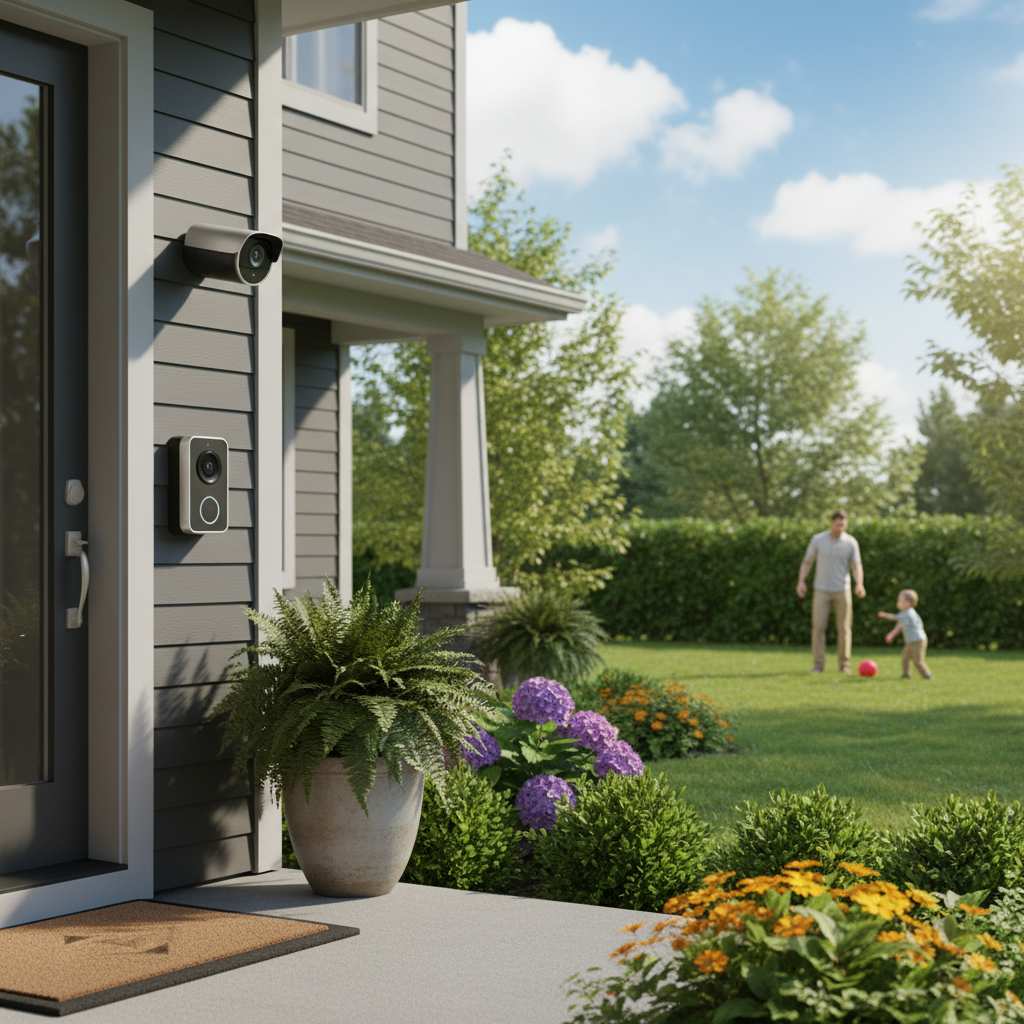
Doorbell cameras combine the capabilities of wireless security cameras with the added function of alerting homeowners when someone rings the doorbell. They effectively serve dual purposes, often eliminating the need for a separate security camera at the front door. Doorbell cameras typically connect to existing low-voltage doorbell wiring, ensuring a steady power supply that removes concerns about battery life. These devices also provide features such as two-way talk and motion detection, allowing homeowners to interact with visitors or delivery personnel remotely.
Floodlight Cameras
Floodlight cameras are a growing segment within home security systems. These cameras are equipped with built-in spotlights or floodlights that illuminate intruders when motion is detected, potentially deterring unwanted activity. The integration of lighting with video surveillance offers enhanced security by making intruders more visible and enabling clearer footage capture in low-light conditions. Floodlight cameras can often be controlled via mobile applications, allowing users to customize settings and receive real-time alerts.
Wireless Security Cameras
Wireless security cameras connect to a home’s WiFi network and can be either plugged into a power source or operate on rechargeable batteries. The term “wireless” specifically refers to their WiFi connectivity rather than their power supply. Some models integrate small solar panels to maintain battery charge throughout the day, enhancing their autonomy. These cameras enable remote monitoring by sending live video feeds, alerts, and recorded clips to smartphones, providing users with flexibility and convenience. Wireless cameras are generally easier to install and operate compared to wired options and often utilize cloud storage for footage access from any location. Notably, because they have their own power supply, many wireless cameras can continue recording even during power or internet outages.
Additional Features Across Camera Types
Modern home security cameras increasingly leverage artificial intelligence technologies, such as large language models, to enhance their functionality. AI-powered features include detailed AI descriptions of detected activity and advanced AI video search capabilities. Instead of generic alerts like “person detected,” these systems can send more informative notifications such as “a person is looking inside parked cars,” thereby improving situational awareness. Additionally, many cameras support software updates that introduce new capabilities over time, including package detection and facial recognition.
Together, these camera types and features offer a comprehensive toolkit for homeowners seeking to protect their property while maintaining ease of use and flexibility.
Key Features and Technologies
Modern home security cameras have evolved significantly, offering a wide array of features and advanced technologies that enhance home protection and user convenience. Among the most common and sought-after capabilities are high-definition video recording, two-way audio communication, smart motion detection, and seamless integration with other smart home devices.
Two-Way Audio Communication
Speakers integrated into security cameras enable two-way communication, allowing users to speak directly with visitors or intruders remotely. This feature is useful for scenarios such as interacting with a person at the door when home alone or deterring potential burglars by announcing that law enforcement is on its way. The inclusion of two-way talk enhances the interactive element of home security systems, making them more versatile beyond passive recording.
High-Definition Video and Streaming
Security cameras today commonly provide at least 720p resolution, with many models supporting 1080p or even 4K video quality. Higher resolution cameras deliver clearer and more detailed footage, making it easier to identify individuals or events. However, streaming multiple high-definition video feeds can demand substantial internet bandwidth, which users need to consider when setting up their systems. Some brands, like Lorex, offer options for local recording without requiring a cloud subscription, ensuring functionality even without continuous internet access.
Smart Motion Detection and AI Integration
Advanced motion detection has become a standard feature in smart security cameras. These systems use artificial intelligence (AI) algorithms to differentiate between types of motion, significantly reducing false alerts caused by animals, cars, or other inanimate objects. Some cameras offer person detection and pet detection, enabling tailored notifications based on the specific movement detected. AI technologies also support facial recognition, object detection, and behavioral analysis, improving the accuracy and usefulness of alerts while enabling proactive monitoring and automated responses.
Customizable Detection Zones and Alerts
Most security cameras allow users to fine-tune motion sensitivity settings and customize detection zones within the camera’s field of view. This customization helps focus alerts on critical areas and reduces unnecessary notifications, thereby enhancing the reliability and effectiveness of the system.
Integration with Smart Home Ecosystems
Many home security cameras are designed to integrate smoothly with popular smart home platforms and voice assistants like Google Home and Amazon Alexa. This integration facilitates convenient control via voice commands and enables users to view camera feeds on various devices, such as smart displays or streaming devices like Chromecast. The compatibility across platforms is an important consideration for users seeking a unified smart home experience.
Power and Installation Options
Security cameras come in both wired and wireless variants, each with their own advantages. Wireless cameras tend to be easier to install and operate, often featuring battery power that allows recording to continue during internet or power outages. Wired cameras typically offer superior video and audio quality, appealing to users prioritizing consistent performance and reliability.
Data Privacy and Compliance
With the increasing amount of video data generated, privacy and data protection have become critical. Regulations such as the General Data Protection Regulation (GDPR) mandate strict policies on data storage, confidentiality, and retention periods to safeguard personal information captured by security cameras. Businesses and users must ensure their systems comply with relevant laws, employing tools like video redaction software to protect privacy and avoid legal penalties.
Installation and Setup
Effective installation and setup are essential for maximizing the security benefits of home security cameras. Proper preparation begins with identifying key monitoring areas, such as entry points including doors and windows, to ensure comprehensive coverage and minimize blind spots. Positioning wireless cameras at a height of 9 to 10 feet can enhance field visibility and improve detection capabilities.
When using wireless cameras, assessing Wi-Fi coverage throughout the property is critical. Insufficient signal strength may require the installation of Wi-Fi extenders to maintain reliable connectivity. Battery-powered wireless cameras offer the advantage of continued recording during power or internet outages, as they operate independently from household power sources.
For wired systems, selecting the appropriate cabling is important for performance and reliability. Cat5e cables are commonly used in residential setups, supporting speeds up to 1 Gbps over distances of up to 100 meters, while Cat6 cables provide higher data rates—up to 10 Gbps—but are most effective for shorter runs (approximately 55 meters). Analog cameras typically use coaxial cables, and Siamese cables are also popular as they combine video and power wires within a single jacket for cleaner installations. Power for wired cameras can be delivered via direct AC, Power over Ethernet (PoE), or low-voltage DC sources.
The physical installation of wired cameras involves routing cables from each camera to a central recording device such as a DVR or NVR. This process usually requires drilling, fishing wires through walls or attics, and securing proper connections. With the correct tools and guidance, many homeowners can undertake this task themselves, reducing installation costs compared to professional services.
Homeowners must also be mindful of legal considerations when installing surveillance equipment. Cameras should generally be directed towards one’s own property—such as entrances and yards—to avoid infringing on neighbors’ privacy. Positioning cameras to avoid recording areas where there is a reasonable expectation of privacy, like bathrooms or inside neighbors’ homes, is legally required. Posting signs indicating surveillance can also serve as a deterrent and help address privacy concerns.
Additional best practices include regularly inspecting camera alignment and lens cleanliness to maintain clear video quality and using surge protectors to protect equipment from electrical damage caused by storms or power fluctuations. When selecting cameras, features such as motion detection, night vision, two-way audio, and professional monitoring options can enhance overall security and convenience.
DIY installations can significantly reduce upfront costs, with many systems designed for user-friendly setup. Popular brands like SimpliSafe, Ring, and Nest offer easy self-installation and integration with mobile apps for monitoring. Subscription plans vary, and self-monitoring options can range from free to approximately $10–$30 per month, depending on services and cloud storage requirements.
By carefully planning camera placement, choosing appropriate equipment, and adhering to legal guidelines, homeowners can ensure a successful installation that provides effective surveillance and peace of mind.
Benefits and Effectiveness
Home security cameras have evolved beyond their traditional role as mere deterrents, becoming integral components of modern smart home systems that provide peace of mind through frequent monitoring, automation, and community engagement. Studies consistently demonstrate that visible security cameras significantly reduce crime rates. For instance, homes equipped with security cameras are 300% less likely to be burglarized, while parking lots with CCTV systems experience up to a 51% decrease in crime. Similarly, urban areas using video surveillance have seen substantial declines in crime; Baltimore reported an average monthly reduction of 30 crime incidents after camera installation, equating to roughly 360 fewer yearly incidents.
The effectiveness of security cameras is enhanced when combined with additional interventions. Research indicates that schemes deploying multiple measures alongside CCTV yield larger reductions in crime than those relying solely on cameras. This suggests that while CCTV is effective on its own, its benefits are maximized when integrated with broader security strategies.
Beyond crime deterrence, security cameras also contribute to liability reduction by providing video evidence that can aid in arrests and legal proceedings. This capability makes cameras valuable not only for preventing crime but also for ensuring accountability.
Advanced features further improve the functionality of home security cameras. Two-way communication via built-in speakers allows homeowners to interact with visitors or warn intruders, enhancing real-time response capabilities. Integration with voice-controlled devices enables convenient access to live feeds, and customizable motion detection settings reduce false alarms by focusing alerts on designated areas. Additionally, the adoption of facial recognition technology in systems from providers like SimpliSafe and Google Nest enables personalized alerts and access control, though privacy considerations remain important.
Legal and Privacy Considerations
Home security cameras have become increasingly popular for protecting residences, but their installation and use are subject to a complex framework of legal and privacy regulations. Understanding these rules is essential to ensure compliance and respect for individual privacy rights.
Privacy Laws and Data Access Rights
Under many privacy laws, individuals have the right to access personal data collected about them, including security footage. The European Union’s General Data Protection Regulation (GDPR) sets a global standard, requiring businesses that monitor individuals who might be EU residents to comply with strict data protection principles. Similarly, the California Consumer Privacy Act (CCPA) grants California residents rights to access and request deletion of personal data, which explicitly includes video surveillance footage. Businesses operating surveillance systems must ensure tools are available to redact footage when necessary and maintain compliance to avoid severe penalties.
Expectations of Privacy and Camera Placement
Legal protections differ based on where cameras are placed and what they record. Generally, it is legal to record video in public or semi-public spaces where there is a lower expectation of privacy, such as streets or commercial areas. However, pointing cameras toward a neighbor’s private property, where privacy is reasonably expected, is typically prohibited. Homeowners are generally permitted to monitor areas they own, including driveways, yards, and pathways, as long as cameras do not invade intimate or private areas. To minimize conflicts, homeowners are advised to position cameras facing their own property and consider privacy settings or physical barriers to limit view of neighboring properties.
Audio Recording and Consent Requirements
Recording audio alongside video raises additional legal concerns. Federal and state laws often require consent for audio recordings. Most U.S. states follow “one-party consent” rules, allowing recording if at least one participant is aware, such as the homeowner. However, some jurisdictions require “two-party consent,” where all parties must agree to recording, particularly for private conversations. Users should verify local laws before enabling audio features and consider disabling audio recording if unsure.
Compliance for Businesses and Data Handling
Businesses using surveillance systems face heightened obligations under data protection laws. They must implement data processing agreements when sharing footage with third parties such as security firms, insurers, or law enforcement to ensure compliance and avoid liability. Under GDPR, businesses may be required to conduct Data Protection Impact Assessments (DPIAs) before starting extensive or systematic monitoring of publicly accessible areas. Additionally, organizations must establish clear data storage policies that define how long footage is retained and ensure the confidentiality and security of personal data to prevent breaches.
Ethical Considerations and Neighbor Relations
Beyond legal requirements, ethical use of home security cameras involves respecting neighbors’ privacy
Market Overview and Industry Trends
The home security camera market is dominated by major key players primarily based in the United States, including Nest (owned by Google), Ring (owned by Amazon), and Arlo (owned by Netgear). In the alarm security segment, prominent companies such as ADT, Vivint, and SimpliSafe lead the industry. On the manufacturing side, the largest IP camera producers hail from China and Sweden, with Hikvision Digital Technology, Dahua, and Axis Communications holding significant market shares.
From a technological standpoint, wired smart home security cameras currently hold the largest market share at 51.0%. However, wireless cameras are experiencing the fastest growth, with a projected compound annual growth rate (CAGR) of 23.3%. Among product types, smart indoor cameras accounted for nearly 39.8% of the market revenue in 2024. The rising adoption of smart security cameras is attributed to their ease of use and advanced features, which appeal to a growing number of consumers.
Several industry trends are driving increased market penetration. Energy conservation efforts and technological advancements have boosted the appeal of innovative smart home security cameras. Additionally, the growing demographic of younger homeowners, who are more receptive to adopting smart technologies such as smart plugs, locks, light bulbs, and security devices, contributes to market growth. The surge in smart home construction, often characterized by a blend of luxury and convenience, along with home remodeling activities, creates lucrative opportunities for smart security products. These trends collectively enhance the demand for technologically advanced home security cameras.
Privacy and data security remain critical concerns amid growing regulatory scrutiny. When video footage is shared with third parties such as security firms, insurers, or law enforcement, data processing agreements (DPAs) are necessary to ensure compliance with increasingly stringent privacy regulations. Failure to establish these agreements may expose businesses to legal liabilities for privacy violations.
Cost considerations also play an important role in the market landscape. A comprehensive security camera system, such as a Reolink 4K setup with multiple cameras, live streaming, person detection, and local storage, typically retails around $299.99 or more. Additional monthly monitoring fees for professional services usually range from $60 to $100, with companies like Vivint, ADT Pulse, and Alarm.com leading in this domain. The overall installation cost averages approximately $1,297, but may vary widely depending on property size, existing infrastructure, and system complexity.
Looking forward, the integration of artificial intelligence (AI) and advanced analytics is poised to shape the future of home security cameras. AI algorithms will enable features such as facial recognition, object detection, and behavior analysis, enhancing alert accuracy and enabling proactive monitoring with automated responses. This advancement is expected to significantly improve the effectiveness of home surveillance systems.
Interoperability with other smart home devices is also a growing trend. Systems like Abode demonstrate extensive compatibility with devices such as Amazon Echo, Nest, Philips Hue, and Yale locks, enabling users to build interconnected smart home ecosystems. Subscription plans offering AI-powered object detection and professional monitoring with cellular backup further augment these systems’ capabilities.
The ease of use of smart security cameras continues to improve with features like voice command integration, customizable motion detection settings, and specialized alerts to reduce false notifications caused by animals or environmental factors. Cameras with person and pet detection functionalities help users receive relevant alerts while minimizing unnecessary notifications.
Diverse product offerings—from wired and battery-powered to solar and integrated lighting cameras—allow consumers to select solutions best suited to their needs and preferences. Wireless cameras offer the advantage of easier installation and cloud storage, ensuring continuous recording even during power or internet outages, whereas wired options provide stable power supply and often higher reliability.
Beyond security, home camera systems are increasingly perceived as integral lifestyle and smart home components rather than purely defensive tools. Frequent monitoring, automation, and community engagement contribute to a broader sense of residential safety and peace of mind. The rise of smart homes encourages integration of security cameras with other smart devices, creating more intelligent and efficient home security systems tailored to modern living.
Communication Protocols and Standards
Home security cameras rely on various communication protocols and standards to transmit video data, control camera functions, and enable interoperability among devices and platforms. Understanding these protocols is essential for effective setup, integration, and management of security systems.
Common Protocols in IP Cameras
Among the most prevalent protocols used in IP cameras are ONVIF, RTSP, and HTTP. ONVIF (Open Network Video Interface Forum) serves as a standardized framework that defines how network video products communicate and ensures compatibility across different manufacturers. RTSP (Real Time Streaming Protocol) is specifically designed for streaming and controlling live video over IP networks, enabling features such as pause, play, and recording controls. HTTP (Hypertext Transfer Protocol), widely known for web communication, is also commonly employed in IP cameras for real-time video streaming and data retrieval purposes.
RTSP and Its Competitors
RTSP is often used for video streaming control but faces competition from other protocols tailored for peer-to-peer connections. One notable example is a text-based control protocol that emerged alongside VoIP technologies, focusing on direct device-to-device streaming without the need for centralized servers. This protocol is frequently utilized in cloud-based consumer cameras, such as those offered by Ring, where ad-hoc streaming connections are established between arbitrary devices. Unlike RTSP, which is more oriented toward client-server streaming models, this alternative protocol emphasizes ease of connection in decentralized environments.
Video Encoding Standards
In addition to communication protocols, video encoding standards like H.264/MPEG-4 play a crucial role in home security cameras, particularly for ensuring efficient compression and quality of video streams. These codecs are widely supported across IP cameras, including many Wi-Fi models, allowing compatibility with hardware DVRs and various streaming software and services.
Integration Challenges and Third-Party Tools
The diversity of protocols and standards can pose challenges when integrating cameras from different brands or linking them with smart home platforms. Achieving seamless interoperability often requires a solid understanding of these communication protocols and may involve using third-party integration tools designed to bridge disparate systems. As the ecosystem evolves, initiatives like Matter and Thread aim to introduce unified standards that improve security and offer more flexible control across devices, although adoption is gradual due to proprietary platforms and the complexity of standard development in areas like video cameras.
Challenges and Limitations
Home security cameras offer numerous benefits, but they also come with several challenges and limitations that homeowners must consider.
Privacy Concerns and Legal Restrictions
One of the foremost challenges involves navigating privacy laws and ethical considerations. Homeowners must be cautious about where cameras are pointed to avoid infringing on neighbors’ privacy, as recording areas with a higher expectation of privacy—such as inside neighboring homes or private backyards—is generally prohibited. Consent from neighbors may be required for surveillance systems that capture their property, especially under regulations like the General Data Protection Regulation (GDPR). Moreover, individuals typically have rights to access personal data, including security footage, under many privacy laws, adding complexity to how video data is managed and shared.
Ethical guidelines emphasize that surveillance technology should support rather than intrude upon daily life, particularly in sensitive settings such as private homes, where expectations of privacy are significantly higher than in public spaces. As personal and neighborhood surveillance technologies become more widespread, questions about legal boundaries and privacy continue to arise, requiring homeowners to balance security benefits with respect for others’ privacy rights.
Security Vulnerabilities and Data Protection
Security cameras themselves can become targets for hacking and unauthorized access. There have been documented cases where vulnerabilities in home security camera models led to large-scale breaches, exposing live video feeds to malicious actors. For example, in 2012, thousands of streaming personal IP cameras were hacked via exploitation of security flaws, and in 2014, numerous unsecured cameras were indexed publicly due to default credentials. Automated tools actively scan for open ports and insecure devices, increasing the risk of data breaches.
These risks highlight the importance of choosing cameras and systems with strong security measures, including secure transmission, encrypted storage, and robust authentication protocols. Wired cameras generally offer better security than wireless options, which may be more susceptible to interception or outages, though wireless systems provide easier installation and remote access.
Installation and Cost Considerations
Installation complexity and cost also pose challenges. While do-it-yourself (DIY) systems can avoid labor fees and provide budget-friendly solutions, professional installation often ensures optimal placement and functionality. Selecting appropriate camera features such as motion detection, video clarity, and power options is crucial for effective coverage, especially in large properties or specific locations like gated entrances, which may require specialized wiring and equipment. Homeowners may also face decisions between wired, battery-powered, or solar-powered cameras, each with their own advantages and trade-offs related to power supply, maintenance, and reliability.
Effectiveness and Research Limitations
Despite their popularity, there is limited peer-reviewed research supporting the claim that surveillance cameras effectively prevent or deter abuse, neglect, or exploitation in residential support settings like group homes. This gap indicates that cameras should be integrated thoughtfully as part of a broader security and care strategy rather than relied upon as a standalone solution.
Regulatory and Compliance Challenges
The increasing complexity of data privacy regulations—such as GDPR in Europe and the California Consumer Privacy Act (CCPA) in the United States—means property owners must be vigilant to avoid potentially severe penalties. Noncompliance with these laws can result in substantial fines, sometimes reaching millions of euros or thousands of dollars per violation. This evolving legal landscape necessitates that homeowners stay informed and implement surveillance systems that comply with current regulations.
Together, these challenges underscore that while home security cameras provide valuable protection, their deployment requires careful attention to privacy, security, cost, and legal compliance to maximize benefits and minimize risks.
Future Directions
The future of home security cameras is poised to be shaped by significant technological advancements that enhance both functionality and user experience. One of the key developments is the continuous improvement in camera technology, including higher resolution imaging that delivers clearer and more detailed footage. Advances in night vision capabilities will also allow cameras to capture high-quality images in low-light or dark conditions, broadening the scope of effective surveillance.
Artificial intelligence (AI) and advanced analytics are set to revolutionize home security systems further. Leading brands are increasingly integrating AI algorithms to enable sophisticated features such as facial recognition, object detection, and behavior analysis. These intelligent capabilities not only improve the accuracy of alerts but also facilitate proactive monitoring and automated response, making surveillance systems more efficient and effective at deterring crime.
In addition to AI-driven enhancements, natural language processing is emerging as a valuable tool for managing video footage. AI video search functions allow users to query their camera recordings using everyday language, significantly reducing the time needed to locate specific events. For example, a user can simply ask, “Did anyone let the dog out today?” and quickly receive relevant video clips without manually sifting through hours of footage.
Integration with smart home ecosystems will continue to expand, offering greater convenience and control. Homeowners will be able to manage their security cameras alongside other connected devices via unified apps or platforms, enabling remote monitoring and instant notifications about suspicious activities. This seamless connectivity enhances both the security and user-friendliness of home surveillance systems.
Energy efficiency and flexible installation options are also driving future innovation. Battery-powered and solar-powered cameras with longer life spans and enhanced motion detection are becoming more prevalent, addressing consumer demand for easy-to-install, adaptable solutions. The introduction of mesh network technology powered by local AI is another promising development, allowing multiple cameras to work collaboratively with minimal latency and improved reliability.
As these technologies evolve, ethical considerations and privacy protections remain critical. Clear guidelines and organizational systems will be essential to ensure that home security cameras are used responsibly, respecting individuals’ reasonable expectations of privacy while maintaining effective surveillance.
Lastly, emerging standards such as Matter and Thread are gradually being adopted in security systems. These protocols promise to enhance system security and interoperability, though widespread implementation is still in progress due to the varied proprietary platforms used by different manufacturers. Overall, the future of home security cameras lies in the fusion of advanced technology, smarter integration, and responsible use, ultimately providing homeowners with unprecedented levels of protection and peace of mind.
The content is provided by Blake Sterling, Scopewires