
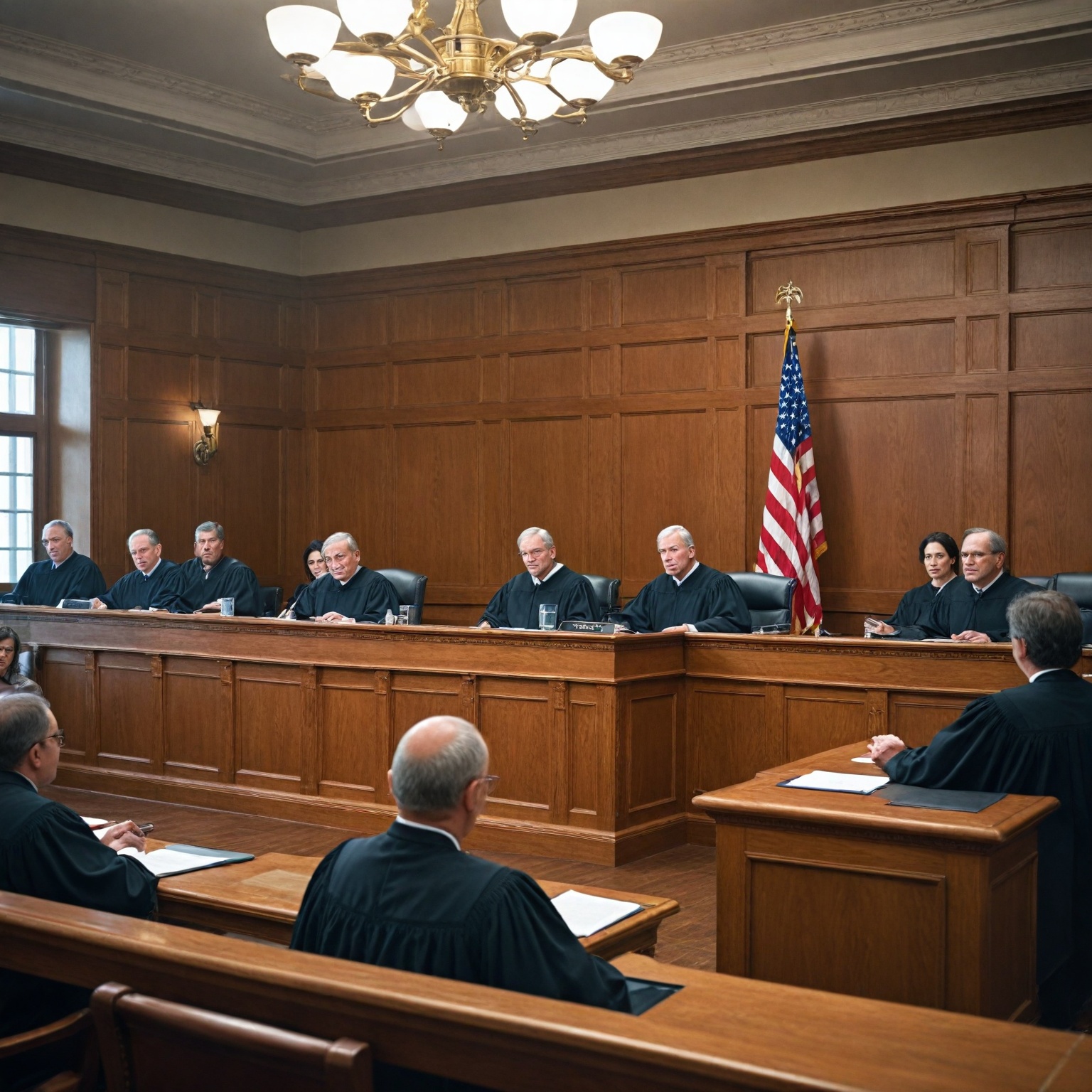
Highlights:
– Legal Repercussions: Judge Boasberg's ruling holding the Trump administration in criminal contempt for disobeying court orders demonstrates the judiciary's role in upholding the rule of law, even against high-ranking officials, setting a significant precedent for executive accountability.
– Complexities of Enforcement: The case sheds light on the nuances of enforcing court orders through criminal contempt, emphasizing the seriousness of noncompliance and demonstrating the judicial system's mechanisms to ensure compliance, even in contentious legal and political contexts.
– Broader Implications: This controversy serves as a critical reminder of the balance of powers among government branches, especially regarding immigration policies, executive authority, and due process rights, prompting a reexamination of legal boundaries and accountability in governance.
Summary
In March 2024, U.S. District Judge James Boasberg found probable cause to hold members of the Trump administration in criminal contempt for willfully violating a court order that barred the deportation of alleged Venezuelan gang members under the Alien Enemies Act of 1798. The administration had used this rarely invoked wartime statute to justify expedited deportations of over 200 noncitizens, whom it classified as part of the violent Tren de Aragua gang, which President Trump described as conducting “irregular warfare” against the United States. Despite a temporary restraining order (TRO) issued by the court halting these deportations and mandating the return of flights already en route, the government proceeded with multiple deportation flights to El Salvador, a move that the court deemed a “willful disregard” of judicial authority.
The case sparked a significant legal confrontation between the executive branch’s immigration enforcement powers and the judiciary’s authority to enforce compliance through contempt proceedings. Judge Boasberg emphasized that disobedience of court orders, especially by officials sworn to uphold the Constitution, threatens the fundamental rule of law. While the administration argued that the court’s jurisdiction ended once flights entered international airspace and invoked Article II executive powers, the judge rejected these claims, affirming that courts can restrain executive actions even abroad and that disobedience forfeits legal defenses.
This controversy also highlighted procedural complexities around criminal contempt, a rare but critical judicial tool for enforcing court orders. Boasberg granted the administration opportunities to purge its contempt by explaining or remedying its conduct but warned that failure to do so could lead to sworn testimony, depositions, and referral to prosecutors for criminal charges. The Department of Justice typically prosecutes contempt cases, but the court reserved the right to appoint an independent prosecutor if necessary.
The ruling drew widespread attention for its rare judicial rebuke of the Trump administration’s immigration policies and raised broader questions about executive overreach, judicial enforcement powers, and due process protections for noncitizens. The involvement of Salvadoran officials, who publicly mocked the court’s intervention, and the administration’s persistence in deportations despite court orders intensified the controversy, underscoring the ongoing tensions between branches of government in a highly charged political and legal environment.
Background
In March 2024, the Trump administration invoked the Alien Enemies Act of 1798 to deport alleged members of the Venezuelan gang Tren de Aragua, which President Trump characterized as conducting “irregular warfare” against the United States. The administration classified the gang as a “hybrid criminal state” posing a grave threat, thereby justifying deportations under this wartime authority, which allows removal of noncitizens with minimal due process protections. Following this, two highly unusual Immigration and Customs Enforcement (ICE) flights carrying over 200 alleged gang members departed from Texas to El Salvador, a country that had agreed to accept these deportees. An immigration activist monitoring deportation flights publicly noted the unusual nature of these flights shortly before their departure.
However, U.S. District Court Judge James Boasberg issued a temporary restraining order (TRO) on March 15, barring the government from deporting all non-citizens subject to the Alien Enemies Act for at least 14 days. He found that the deportations would cause irreparable harm and mandated that Immigration and Customs Enforcement retain custody of the affected individuals while the legal challenges proceeded. Furthermore, Boasberg ordered that any flights already in progress should be turned around mid-air.
Despite the court order, the administration continued with the deportations, arguing that since the flights were over international waters, the TRO did not apply. Public statements by administration officials and the President of El Salvador suggested the court’s orders came too late to halt the flights, reinforcing concerns about possible violations of the judicial injunction. The Trump administration’s refusal to comply with the court’s orders and its failure to provide information during subsequent hearings led Judge Boasberg to find “probable cause” to hold members of the administration in criminal contempt. He characterized the government’s actions as demonstrating “willful disregard” for the court’s directive and warned that ignoring judicial orders without consequences would undermine the Constitution itself.
The legal debate surrounding this case highlights the tension between executive authority in immigration enforcement and the judiciary’s power to enforce compliance through contempt proceedings. Federal courts typically rely on U.S. attorneys to prosecute criminal contempt cases, and while a sitting president has never been held in contempt, courts have historically used this power to compel government officials and agencies to obey court orders. The case thus raises significant questions about the limits of executive power, the scope of judicial authority, and the protections afforded to noncitizens under the law.
Court Orders Regarding Deportation Flights
In response to the Trump administration’s deportation flights under the Alien Enemies Act, U.S. District Judge Boasberg issued several court orders aimed at halting the removals and addressing alleged violations. On the day that two highly unusual ICE flights departed from Texas to El Salvador carrying Venezuelan gang members, Boasberg ordered an immediate halt to the deportations and instructed that any ongoing flights be turned around mid-air during a hearing initiated by the ACLU.
Finding that the deportations would cause irreparable harm, the judge issued a temporary restraining order (TRO) barring the administration from deporting all non-citizens subject to the Alien Enemies Act proclamation for at least 14 days. During this period, ICE was ordered to maintain custody of the affected individuals as the lawsuit proceeded through the courts. Despite this, top administration officials argued that because some flights were over international waters, Boasberg’s order did not apply to those deportations.
Plaintiffs’ attorneys later reported that two flights carrying migrants under the Alien Enemies Act landed after the court’s verbal and written orders, suggesting that the administration violated the TRO. Public comments from the defendants and the President of El Salvador, boasting about the court being “too late” to prevent the deportations, further raised concerns of noncompliance with the judge’s directive.
In the event that declarations submitted by the administration are deemed “unsatisfactory,” Judge Boasberg indicated he would compel sworn witness testimony or depositions conducted by plaintiffs’ lawyers and could direct the Justice Department to prosecute contempt charges. He also clarified that the administration could avoid contempt proceedings by reasserting custody over the deported migrants, thereby allowing them to challenge their removability, or by proposing alternative methods to comply with the court’s order.
Further emphasizing enforcement mechanisms, the court noted the availability of contempt proceedings and attorney sanctions as tools to ensure compliance. Should the administration opt not to purge its contempt, they were required to file declarations by April 23, 2025, either detailing steps taken to comply or identifying officials responsible for defying the TRO.
Additionally, plaintiffs requested that Judge Boasberg issue a nationwide order mandating a 30-day notice before any future removals under the Alien Enemies Act to afford detainees a meaningful opportunity to challenge their deportation. This request was underscored by concerns that some noncitizens might be deported with less than a day’s notice, effectively preventing them from contesting their removal. The Supreme Court had recently ruled 5-4 that the administration could resume deportations under the Act but emphasized that due process must be afforded to detainees.
Investigation and Legal Proceedings
Following the Trump administration’s continuation of deportation flights to El Salvador despite a court order to halt such actions, U.S. District Court Judge James Boasberg initiated an investigation into potential criminal contempt. The controversy began when an immigration activist reported that two highly unusual ICE flights were departing from Texas to El Salvador, which had agreed to accept Venezuelan gang members deported under the Alien Enemies Act (AEA). In response, Boasberg issued a temporary restraining order (TRO) barring the deportation of all non-citizens subject to the AEA proclamation for at least 14 days, citing the irreparable harm the deportations would cause and ordering any flights en route to be turned around mid-air.
Despite the order, the administration proceeded with the flights, contending that the court’s authority did not extend over international waters and emphasizing executive authority under the AEA, which permits expedited deportations of individuals deemed threats to national security. Plaintiffs’ attorneys noted that the deportations occurred after both verbal and written orders from the court, with public comments from defendants and the President of El Salvador indicating a deliberate disregard for the court’s injunctions. This prompted Boasberg to find that probable cause existed to hold members of the administration in criminal contempt, describing their actions as a willful disobedience of judicial orders that “the Constitution does not tolerate”—particularly by officials sworn to uphold it.
In the course of the proceedings, Boasberg granted the administration multiple opportunities to explain or rectify its conduct. When declarations submitted were deemed unsatisfactory, the judge signaled his intention to require sworn witness testimony or depositions conducted by the plaintiffs’ attorneys, after which he would ask the Justice Department to prosecute the contempt charges. The prosecution of such contempt cases typically falls to a government-appointed prosecutor and is conducted in the same court where the order was violated, in accordance with Federal Rules of Criminal Procedure and Rule 42 of the Federal Rules of Criminal Procedure, which clarify the appointment of prosecutors and procedural safeguards in criminal contempt cases.
Boasberg’s ruling represents a significant judicial rebuke of the Trump administration’s defiance, emphasizing the inherent authority of courts to enforce their judgments and maintain the rule of law—a power dating back to the Judiciary Act of 1789 and codified through contempt proceedings, whether civil or criminal. The case underscores the constitutional tension between executive actions and judicial authority, particularly in the context of immigration enforcement under wartime statutes.
Judge’s Ruling on Probable Cause
U.S. District Judge James Boasberg ruled that there was probable cause to find the Trump administration in criminal contempt for willfully disobeying a judicial order related to deportation flights. In his opinion, Boasberg emphasized that the court does not arrive at such a conclusion lightly or hastily, noting that the defendants were given ample opportunity to rectify or explain their actions, yet none of their responses proved satisfactory.
The judge underscored the seriousness of the administration’s conduct, stating that “The Constitution does not tolerate willful disobedience of judicial orders — especially by officials of a coordinate branch who have sworn an oath to uphold it”. He found that the government’s actions on the relevant day demonstrated a willful disregard for the court’s order, which was sufficient to establish probable cause for criminal contempt.
Boasberg allowed the Trump administration a chance to remedy the breach before initiating contempt proceedings. This remedy could include asserting custody over the migrants who had been removed in violation of the order, thereby enabling them to challenge their removability. The administration was also permitted to propose alternative methods of compliance with the court’s directive.
Should the administration fail to purge the contempt, the judge indicated he could require officials to submit sworn declarations or answer questioning under oath. Further, Boasberg stated he might order that a government prosecutor take up the contempt case or, if the government refused, appoint a private prosecutor.
This ruling represents a significant judicial rebuke of the Trump administration’s handling of immigration enforcement and highlights the judiciary’s authority to hold the executive branch accountable for violations of court orders.
Legal Arguments Presented
In the case concerning the deportation flights under the Alien Enemies Act, multiple legal arguments were presented regarding the alleged contempt of court by the Trump administration. U.S. District Judge James Boasberg found that the government’s actions demonstrated a “willful disregard” for his order barring the transfer of certain migrants into Salvadoran custody, which established probable cause to find the government in criminal contempt. The judge emphasized that the Constitution does not tolerate willful disobedience of judicial orders, especially by officials sworn to uphold the law.
The administration argued that the judge’s authority ceased once the planes left U.S. airspace, contending that the court’s injunction infringed upon the President’s Article II powers. However, Judge Boasberg rejected this claim, noting that federal courts routinely restrain executive actions abroad, including those touching on national security. The judge also stated that if the defendants believed the injunction encroached on executive power, they had the option to seek judicial review without disobeying the order; disobedience forfeited their right to raise such legal defenses.
In response to the government’s failure to comply, the court outlined the procedural steps to enforce its order. These include allowing the government an opportunity to purge the contempt by providing satisfactory explanations or identifying responsible parties. If unsatisfactory, the court may require sworn witness testimony or depositions and refer the matter to a prosecutor for contempt charges, which must be proven beyond a reasonable doubt under the Federal Rules of Criminal Procedure. Although the Department of Justice typically prosecutes such cases, the court may appoint an independent prosecutor if the DOJ declines to act or if the interest of justice requires it.
The government’s alleged disregard of the court order prompted criticism from advocacy groups, who characterized the conduct as unlawful and a constitutional threat. The Department of Justice defended its actions as necessary to remove dangerous aliens, including alleged members of the Venezuelan gang Tren de Aragua, classified under the Alien Enemies Act as conducting irregular warfare against the United States. Meanwhile, plaintiffs’ attorneys pointed to evidence that flights landed after the court’s orders, reinforcing claims of contempt.
Finally, the legal framework distinguishing civil and criminal contempt was also underscored, with the court observing that criminal contempt proceedings carry serious penalties, including fines and imprisonment, and must follow due process protections such as the right to a jury trial where applicable. This ensures that contempt sanctions are imposed only after careful judicial consideration and procedural safeguards.
Reactions and Impact
The ruling by U.S. District Court Judge James Boasberg, which found “probable cause” to hold members of the Trump administration in criminal contempt for disobeying his order to halt deportation flights under the Alien Enemies Act, triggered significant reactions across the political and legal spectrum.
White House officials, including communications director Steven Cheung, responded swiftly by announcing plans to seek immediate appellate relief. Cheung reiterated the administration’s commitment to combating what it described as threats posed by terrorists and criminal illegal migrants, emphasizing that the President remains “100% committed” to these goals despite the court’s ruling. Meanwhile, some administration officials argued that Boasberg’s order did not apply to flights over international waters, which they used to justify proceeding with the deportations despite the temporary restraining order (TRO).
On the other hand, plaintiffs’ attorneys and critics highlighted the administration’s apparent disregard for the court’s orders. They pointed to public information showing that two flights carrying migrants landed after both verbal and written injunctions, raising concerns that the administration had willfully violated the court’s directive. The involvement of Salvadoran officials, who mocked the judge’s order by boasting that it was “too late” to stop the deportations, further fueled controversy. Notably, El Salvador’s President Nayib Bukele publicly ridiculed the court’s intervention on social media, with U.S. Secretary of State Marco Rubio retweeting the post.
The decision marked a direct and rare judicial rebuke of the Trump administration’s immigration policies and escalated tensions between the federal judiciary and the executive branch. The case underscored ongoing conflicts surrounding the administration’s aggressive use of the Alien Enemies Act, a statute dating back to 1798, to summarily deport individuals alleged to be gang members. Judge Boasberg’s ruling emphasized that the administration had acted with “willful disregard” for his order, and he provided a pathway for the government to “purge” its contempt by explaining corrective measures to be taken by a specified deadline.
Legal scholars and commentators noted the significance of contempt proceedings in maintaining respect for judicial authority and the rule of law, particularly in a period characterized by a breakdown in traditional political and legal norms. The case highlighted broader concerns about the erosion of compliance with court orders by government officials and the potential ramifications for the integrity of the American legal system.
Subsequent Developments
Following the initial finding of probable cause to hold the Trump administration in criminal contempt for violating
The content is provided by Avery Redwood, Scopewires


