
Highlights
- Effective air purification is essential for combating health risks from indoor air pollution.
- Professional installation ensures safety and compliance with modern energy efficiency regulations.
Summary
This guide reviews air purifier technologies, installation methods, regulations, and best practices for improving indoor air quality in homes and businesses. It covers standalone and whole-home systems using HEPA filters, activated carbon, photocatalytic oxidation, and ionization. Professional installation is recommended for integrating purifiers with HVAC systems to ensure safety, compatibility, and code compliance. The guide also highlights 2024 regulatory updates focused on energy efficiency and filtration standards. While air purifiers reduce many pollutants, comprehensive air quality management also requires ventilation and pollution source control. Innovations include hybrid filtration and smart features, though some technologies like ionization raise concerns about ozone by-products. This resource assists homeowners and professionals in navigating technical and regulatory challenges to achieve healthier indoor environments.
Indoor Air Pollutants and Health Impacts
Indoor air contains particles and gases such as VOCs, PM2.5, formaldehyde, mold, and pollen from sources like smoke, chemicals, and furnishings, often accumulating in poorly ventilated spaces. Exposure is linked to respiratory, cardiovascular, and cognitive issues, with young children especially vulnerable. Radon, carbon monoxide, and Legionella pose serious risks. HEPA filters effectively capture particulates but less so gases, so air purification must be combined with ventilation and pollutant source control for meaningful health benefits.
Air Purifier Technologies and Installation Types
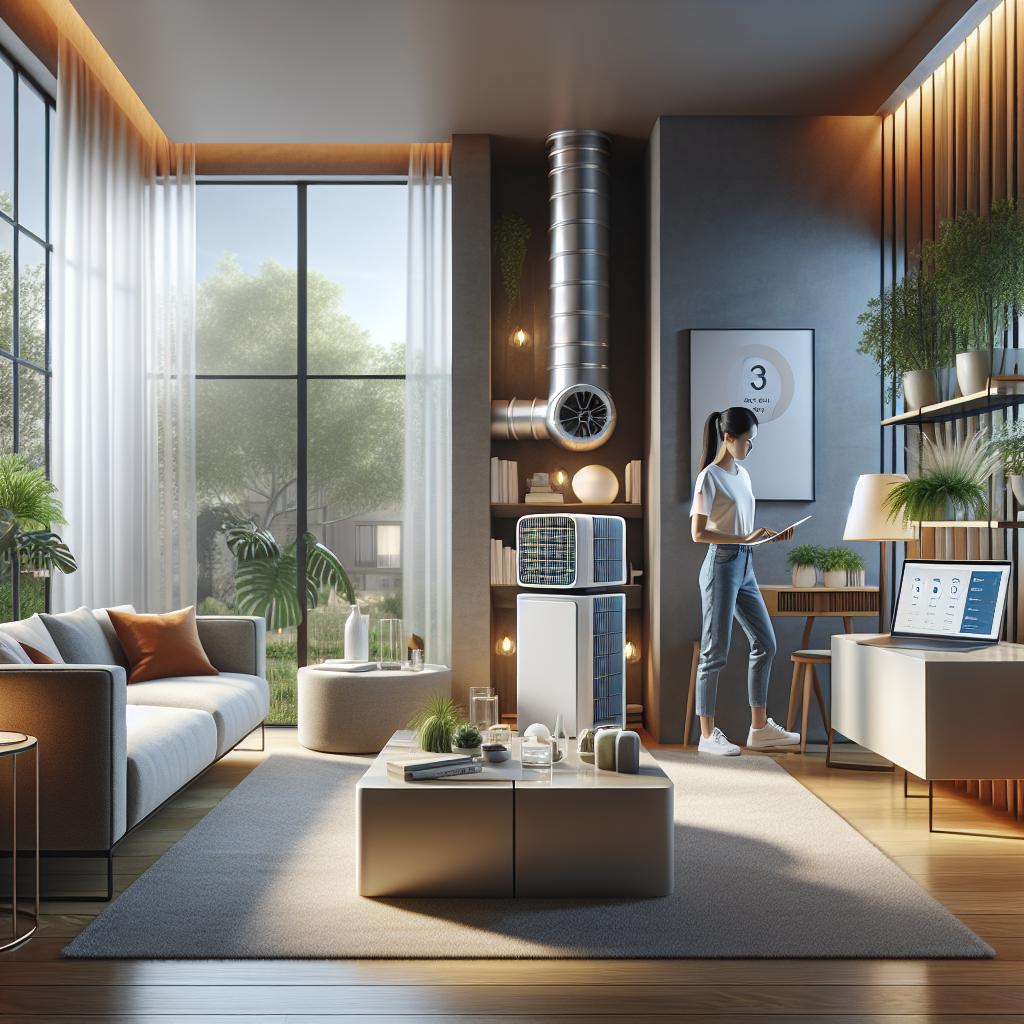
Air purifiers use filtration (HEPA, activated carbon), photocatalytic oxidation (PCO), ionization, and emerging bio-reactive methods to remove pollutants. HEPA filters trap particles ≥0.3 microns with 99.97% efficiency; activated carbon adsorbs gases and odors. PCO uses UV light and catalysts to neutralize VOCs and microbes, while ionization charges particles for easier removal. Systems are either standalone portable units or in-duct HVAC-integrated purifiers, with in-duct systems offering whole-home air cleaning but requiring professional installation and maintenance.
Installation Preparation and Process
Installation begins with a professional assessment of HVAC capacity, home layout, and electrical compatibility to avoid airflow restrictions or system damage. Whole-home purifiers are mounted inside ductwork with bypass loops and require electrical wiring and permits. Portable units need only filter installation and strategic placement for airflow. Proper preparation includes selecting suitable filtration based on pollutant types and ensuring all mounting hardware is ready. Maintenance tasks like filter replacement can often be done by homeowners.
Placement, Operation, and Safety Considerations
Effective purifier placement ensures unobstructed airflow and targets pollution sources, with central room locations preferred for even air distribution. Electrical work must comply with local codes and NEC standards, using licensed professionals to verify wiring, clearances, and disconnects. Improper installation risks airflow restriction, system inefficiency, and safety hazards. Some technologies may produce ozone or harmful by-products if poorly maintained. Safety protocols include shutting down power before work and using protective gear.
Maintenance and Troubleshooting
Regular cleaning and timely filter replacement maintain purifier efficiency. HEPA and activated carbon filters require periodic changes per manufacturer guidelines, with some units featuring real-time air quality monitoring. Troubleshooting involves checking installation correctness, filter condition, and electrical connections. Commercial settings follow stricter standards like ISO 16890 and ASHRAE 52.2, with biannual testing and monitoring to ensure performance and regulatory compliance.
Integration with HVAC Systems
In-duct purifiers installed near air handlers use PCO, ionization, and filtration to clean air throughout the home, reducing duct contamination and improving HVAC efficiency. Installation involves creating bypass loops in ductwork and electrical integration controlled by thermostats. Compatibility and airflow must be verified professionally. Centralized systems simplify maintenance compared to multiple standalone units but do not replace ventilation or pollution control measures.
2023 Innovations
Recent advances emphasize airflow optimization, quieter operation, and hybrid filtration combining HEPA, activated carbon, and UV technologies. Reusable electrostatic purifiers offer sustainable options, though less effective on ultrafine particles. Wall-mountable models and smart features improve usability and space efficiency. Increased adoption driven by COVID-19 concerns has accelerated development of pathogen-reducing and user-friendly features in residential and commercial air purifiers.
2024 Industry Standards and Regulations
New DOE efficiency standards for portable air cleaners, effective 2024, aim to reduce energy use while maintaining performance, with expected consumer savings exceeding $25 billion over 30 years. ASHRAE updates propose stricter filtration (MERV13A replacing MERV13), aligning with respirator standards. Standards like ASHRAE 62.1 govern filtration for non-residential buildings, emphasizing particulate and gaseous pollutant removal. Mandatory biannual testing, energy consumption limits, and real-time air quality monitoring are increasingly required, varying by sector. Compliance requires professional installation to ensure safety and effectiveness.
Environmental Impact and Energy Efficiency
Consumers seek air purifiers balancing effectiveness with low energy use to reduce emissions of climate pollutants like black carbon. Whole-home HVAC-integrated systems offer environmental benefits by lowering maintenance and waste compared to multiple standalone units. Though they add modest electrical load, good designs maintain HVAC efficiency. Advanced filters like high-efficiency gas adsorption and hybrid systems extend filter life and enhance pollutant removal with minimal environmental trade-offs.
Frequently Asked Questions
MERV rating: Indicates filter efficiency; higher ratings improve particle removal and indoor air quality.
Virus survival indoors: Airborne viruses can remain infectious for hours, making filtration and ventilation crucial.
Pollutants affecting viral spread: PM10, PM2.5, NO2, SO2, CO, O3, CO2, and VOCs increase viral disease incidence and severity.
Environmental factors: Humidity and temperature influence indoor virus transmission.
Indoor vs. outdoor air quality: Indoor air is typically 5-10 times more polluted than outdoor air.
Official guidelines: WHO 2010 guidelines address indoor air pollution health impacts.
The content is provided by Jordan Fields, Scopewires


