
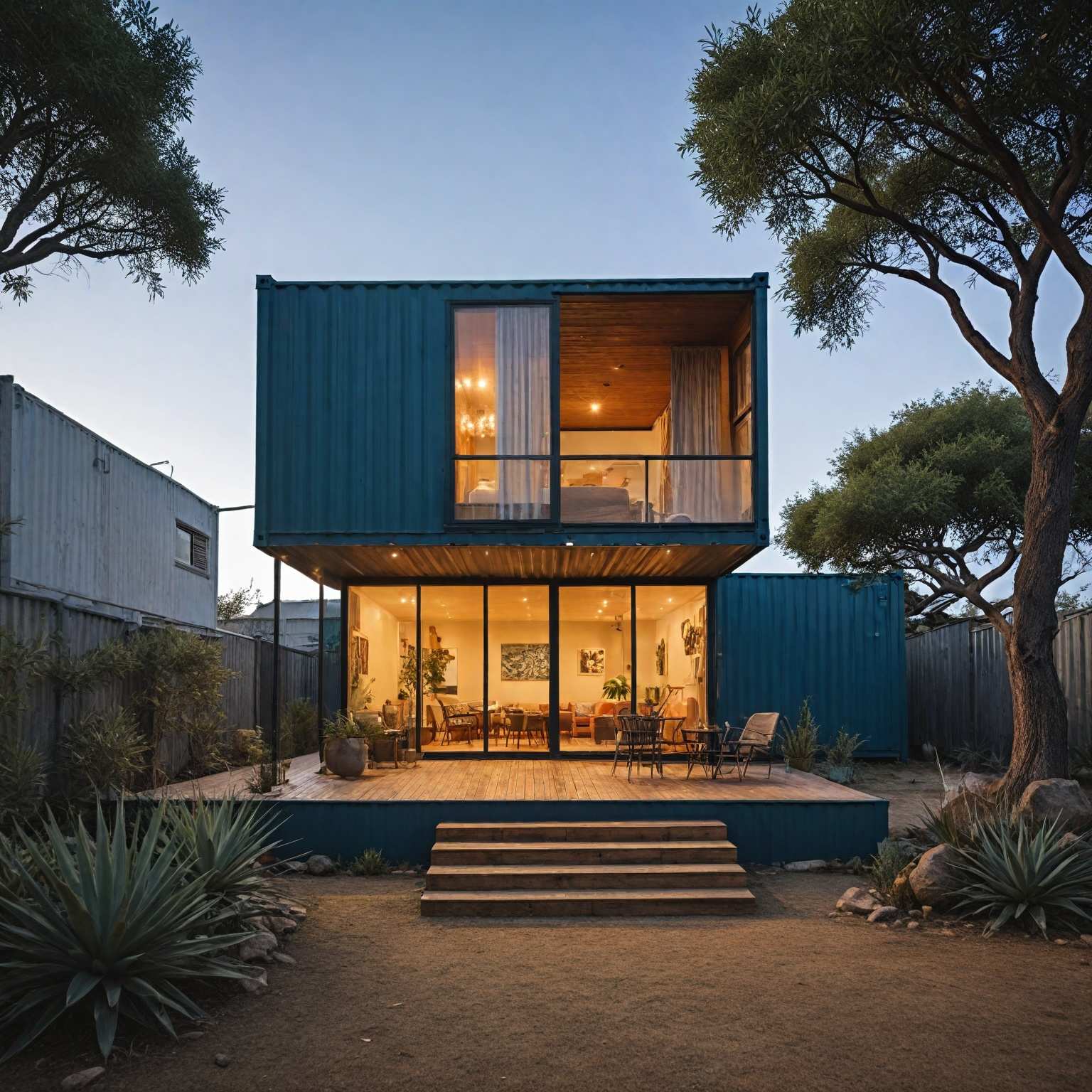
Highlights
- Affordable and Sustainable Solution: Container houses in South Africa present a cost-effective and environmentally friendly alternative to traditional housing, addressing the country's housing shortage and rising construction costs.
- Regulatory Support and Government Initiatives: Supported by regulatory frameworks and government subsidies, container homes become more accessible and financially viable for potential buyers, contributing to their increasing popularity and adoption in urban and rural areas of South Africa.
- Thermal Challenges and Innovation Opportunities: Thermal performance issues in container homes prompt the need for innovative design solutions to enhance energy efficiency and occupant comfort, highlighting opportunities for advancement in insulation and ventilation technologies.
Summary
Modern container houses in South Africa represent a growing housing trend that repurposes decommissioned shipping containers into affordable, sustainable, and adaptable living spaces. Amidst the country’s persistent housing shortage and escalating construction costs, container homes have emerged as a cost-effective alternative to conventional brick-and-mortar dwellings, offering advantages such as reduced build times, modular design flexibility, and environmental benefits through material reuse and lower embodied carbon emissions. Their increasing popularity spans urban centers like Johannesburg and Cape Town as well as rural and peri-urban areas, reflecting their versatility in diverse climatic and geographic contexts.
The adoption of container homes in South Africa is supported by regulatory frameworks that require compliance with the National Building Regulations and local council approvals, alongside certification from the Board of Agrément South Africa for non-standard construction methods. While container housing can be approximately 30-35% cheaper than traditional construction, the overall cost depends on factors such as container acquisition, structural modifications, insulation, professional fees, and site-specific logistics. Government policies enacted in 2025 have expanded subsidies and eligibility criteria for container home buyers, further enhancing affordability and accessibility.
Despite their promise, container homes face notable challenges, particularly concerning thermal performance and energy efficiency in South Africa’s varied climates. The metal construction of shipping containers can lead to significant heat gain or loss, necessitating advanced insulation and ventilation solutions to maintain occupant comfort and reduce energy consumption. Research highlights that without adequate thermal management, indoor temperatures may reach levels associated with health risks, underscoring the need for continued innovation in design and materials.
Container housing also intersects with social and economic dimensions, offering potential solutions to housing shortages and informal sector needs through faster, affordable construction and opportunities for cottage industries. However, navigating regulatory approvals, ensuring compliance with building codes, and addressing public perceptions remain critical factors influencing their broader acceptance. With growing government support, technological advancements, and streamlined subsidy programs, container homes are poised to play an increasingly significant role in South Africa’s sustainable housing landscape.
Overview of Modern Container Houses
Modern container houses in South Africa are innovative residential structures created by repurposing shipping containers into livable spaces. These homes offer an affordable alternative to traditional brick-and-mortar houses while also providing advantages such as sustainability, flexibility, and ease of maintenance. The trend of container homes is rapidly gaining momentum across various South African regions, from urban centers like Johannesburg to coastal areas such as Cape Town, due to their adaptability to diverse climates and landscapes. Container homes are not only cost-effective but also environmentally friendly, as they involve recycling used shipping containers and reducing construction waste. With the ongoing housing challenges in South Africa, including a significant demand for low-cost housing, container houses present a promising solution that aligns with the country’s ambitious housing policies and goals for sustainable development.
In addition to affordability and environmental benefits, container homes are fully legal in South Africa provided they comply with the National Building Regulations and receive local council approvals. The designs of these homes range from simple single-container units to complex multi-container configurations, allowing customization to meet various lifestyle needs while maintaining modern and stylish aesthetics.
Structural Modifications and Construction Process
When converting shipping containers into homes, structural modifications are a critical consideration to ensure safety and compliance with building regulations. Shipping containers derive their structural integrity primarily from their four corner posts and the corrugated steel walls. Therefore, any openings such as windows, doors, or other cut-outs must be reinforced with steel framing to maintain the container’s strength and stability. Failure to reinforce these openings can compromise the structural soundness of the container home.
In South Africa, the design and construction of container homes must comply with the National Building Regulations, particularly SANS 10400, which governs accessibility, health, and safety standards for residential structures. Before proceeding with modifications, it is essential to involve qualified structural engineers and architects to ensure that designs are both feasible and meet legal requirements. Council approval is a necessary step prior to construction to avoid regulatory issues.
The construction process begins with site preparation, including clearing, leveling, and grading the land to provide adequate drainage. Like conventional houses, container homes require solid foundations to ensure stability and longevity. Given the unconventional nature of shipping container homes, builders must also obtain an agrément certificate from the Board of Agrément South Africa if non-standard materials or methods are used. This certification confirms the fitness-for-purpose of the materials or designs employed.
Compared to conventional construction, building with shipping containers can significantly reduce build time. Intermodal Steel Building Unit (ISBU) homes can be constructed up to three times faster, largely due to the modular nature of the containers and prefabrication options available. Prefabricated modular units can be delivered to the site and installed rapidly, with only minor finishing work required, thereby speeding up the overall process.
Detailed Cost Analysis
Building a container home in South Africa presents a cost-effective alternative to traditional housing, but several factors influence the total expenses. The largest single cost is acquiring the shipping container itself, with prices for used containers ranging widely depending on size, condition, and supplier. For instance, a used 40-foot container typically costs between R25,000 ($1,750) and R55,000 ($3,850), while smaller containers of 6 to 12 metres range from approximately R20,000 to R60,000. Refurbished or modified containers generally command higher prices, and transport fees can further affect the final cost depending on location and availability.
Beyond the container purchase, additional costs include modifications such as cutting for windows and doors, insulation, installation of plumbing and electrical systems, and foundation work. Insulation is particularly important in South Africa’s climate to ensure energy efficiency and comfort, and this may involve insulating either the interior or exterior surfaces of the container. The involvement of qualified professionals—architects, structural engineers, and certified tradespeople—is essential for ensuring compliance with building codes, securing permits, and guaranteeing structural integrity, all of which add to the overall expenditure.
The scale and complexity of the design directly impact labor and materials costs. Simple, utilitarian container homes with basic finishes are more budget-friendly, whereas fully customized homes with high-end fixtures and intricate designs can significantly increase costs. Basic container homes in South Africa start at around R100,000, while fully customized and larger-scale container houses can exceed R1,000,000. Additionally, construction timelines are typically shorter for container homes—sometimes up to three times faster than conventional builds—potentially reducing labor costs and related expenses.
Legal and administrative requirements also contribute to the cost structure. Compliance with local zoning laws, obtaining necessary permits, and adhering to regulations for non-standard building materials such as shipping containers can incur fees and require certification, including obtaining an agrément certificate from the Board of Agrément South Africa for non-standard materials. The costs associated with these processes vary depending on the municipality and specific project requirements.
Location factors such as the availability of skilled labor, proximity to suppliers, and transport infrastructure affect total costs as well. Moreover, recent policy changes aiming to broaden subsidy eligibility for container homes may offset some expenses for low- to middle-income buyers and first-time homeowners, making container living more financially accessible. Overall, container homes can be approximately 30-35% cheaper than traditional brick-and-mortar houses, but a detailed budget must consider all these variables to accurately reflect the total investment required.
Environmental Impact and Sustainability
Container homes in South Africa present a promising alternative to traditional brick-and-mortar housing, with notable environmental and sustainability benefits. By reusing unused shipping containers, these homes significantly reduce the demand for new raw materials, thus helping to lower embodied carbon emissions associated with the extraction, processing, and transportation of building materials. This reuse aligns with global sustainability goals and supports efforts to minimize the overall carbon footprint of the built environment, which is crucial given that upfront carbon emissions could account for half of new construction emissions by 2050 if left unaddressed.
Constructed primarily from steel, container homes are inherently sturdy and resistant to extreme weather conditions common across South Africa’s diverse climates, requiring minimal maintenance over time. This durability contributes to their environmental value by extending the lifespan of the building materials and reducing waste from frequent repairs or rebuilds. Furthermore, these homes can be outfitted with energy-efficient features such as solar panels, rainwater harvesting systems, and energy-smart appliances, enhancing their sustainability and lowering operational energy use.
However, the environmental performance of container homes depends significantly on proper insulation and ventilation. South Africa’s wide temperature variations, from hot summers to cold winters, demand effective thermal regulation to maintain occupant comfort and reduce energy consumption for heating or cooling. Without adequate insulation, steel containers can amplify heat transfer, causing indoor temperatures to closely mimic outdoor extremes, which may pose health risks and increase energy needs. Insulation options must balance thermal performance with the trade-off of reduced interior space and the challenge of retrofitting containers while preserving their structural integrity.
In addition to environmental benefits, container homes offer social sustainability advantages by potentially addressing housing shortages in low-cost markets through faster, more affordable construction that does not sacrifice quality or comfort. Their modularity and mobility allow deployment in both urban centers and rural areas, providing flexible housing solutions tailored to community needs. These factors, combined with streamlined subsidy programs promoting green features, position container housing as a viable, eco-friendly option in South Africa’s ongoing efforts toward sustainable development.
Energy Efficiency and Thermal Performance
Container homes in South Africa are designed with energy efficiency as a priority, incorporating proper insulation, energy-smart appliances, and eco-conscious features to maintain comfortable indoor temperatures year-round while minimizing energy costs. These homes often include sustainable elements such as solar panels and rainwater harvesting systems, further enhancing their eco-friendly credentials and reducing their environmental footprint. Proper insulation plays a critical role in regulating indoor temperatures, reducing reliance on heating and cooling systems, and cutting electricity costs.
Despite these advantages, challenges remain regarding the thermal performance of container homes, especially in hot and mixed climates like those found in South Africa. Studies have shown that even with the application of thermal insulation, indoor temperatures within container structures can reach levels (27 °C – 32 °C) associated with high health risks. For example, in tropical climates such as the Philippines, insulation materials like foam and fiberglass batting did not significantly improve indoor thermal conditions, and the marginal benefits of closed-cell spray polyurethane were questioned due to cost. Similarly, a study of shipping container classrooms in Johannesburg recorded summer temperatures exceeding 40°C, highlighting the vulnerability of such structures to extreme heat.
Simulations of future climate scenarios predict temperature increases of up to 5°C, underscoring the urgent need for more efficient thermal management solutions in container housing to safeguard occupant health and comfort. Given the thermal conductivity of metal containers, heat transfer is a significant concern, and improvements in insulation materials and building design are necessary to mitigate indoor heat gain and storage.
Design strategies to optimize energy efficiency include controlling window-to-wall ratios (WWR) to between 9%–25% on south/north facades and 6%–12% on west facades, using argon-filled double clear glass for mixed climates and adding low-emissivity layers for hotter environments. Such measures contribute to an annual electricity consumption of approximately 176 kWh/m² in designed container houses. Additionally, prefabrication and modular construction techniques enable faster build times and reduced labor costs without compromising comfort or style.
Economic and Social Factors
Container homes in South Africa present a compelling economic alternative to traditional brick-and-mortar housing, offering significant cost savings primarily due to reduced material expenses and faster construction times. The cost of acquiring a shipping container, which varies based on factors such as size, condition, and local demand, constitutes a major component of the overall price. For instance, a 20-foot container may suit a small studio home, while larger or multiple containers enable more spacious layouts, influencing the final cost. Customization, including insulation, plumbing, electrical installations, and interior finishes, also significantly impacts pricing.
The affordability advantage is underscored by industry estimates that container homes can be approximately 30-35% cheaper than conventional houses, largely because traditional foundations can be expensive, and alternative foundation methods like plinth arrangements are recommended for container builds. Additionally, construction timelines for container homes are notably shorter—up to three times faster—facilitating quicker occupancy and potential savings in labor costs. However, labor and construction costs depend on factors such as the complexity of design, quality of finishes, and the expertise of contractors, with simple utilitarian designs being more budget-friendly.
Location is a critical economic factor influencing container home costs. Proximity to urban centers tends to lower transportation and labor expenses, while remote or difficult-to-access sites may incur higher delivery fees and increased logistical challenges. The availability of skilled labor familiar with container construction also affects costs and quality. Proper insulation, ventilation, and weatherproofing are essential to ensure durability and comfort in South Africa’s diverse climate, often requiring consultation with engineers or architects to comply with building codes and standards.
Social acceptance and regulatory compliance are vital considerations in the adoption of container homes. The National Home Builders Registration Council (NHBRC) enforces adherence to the National Building Regulations and Building Standards Act, which mandates specific criteria relating to accessibility, health, safety, and structural integrity. Builders must often obtain agrément certificates for non-standard materials or designs, ensuring fitness-for-purpose and compliance with national standards. Furthermore, buyers must navigate local zoning laws and secure necessary approvals, which may add to administrative costs and timeframes.
Socially, container homes appeal to individuals and families seeking affordable, sustainable, and flexible housing solutions. This housing model supports eco-conscious living by enabling integration of energy-efficient features such as solar panels and rainwater harvesting systems, which may qualify owners for tax incentives and subsidies. Recent policy changes have increased subsidy amounts and streamlined application processes via online platforms, enhancing accessibility to container home funding. Financing options from South African banks are available, particularly when container homes meet formal housing criteria and are constructed on legally owned land, although applicants must provide detailed building plans, zoning compliance proof, and construction cost estimates.
Government Policies and Market Context
South Africa faces a significant housing backlog that continues to grow, posing a considerable challenge to social housing programmes and beneficiaries. Despite delivering over 3 million publicly funded houses since 1994, progress has slowed in metropolitan areas, with only 21% of residential properties in eThekwini (Durban) being government subsidized. The increasing social pressures and population growth demand urgent alternative housing solutions, with container homes emerging as a practical, though initially unconventional, option to address low-cost housing needs.
In response to technological innovations within the building sector, the South African government established the Board of Agrément South Africa. This body reviews, approves, and accredits new construction technologies, including shipping container homes, ensuring they meet safety and quality standards through agrément certificates. These certificates validate the fitness-for-purpose of non-standard materials and designs, allowing container homes to comply with national regulations under the National Building Regulations and SANS 10400.
Policy changes in 2025 have expanded the eligibility criteria for subsidies on container homes. Whereas support was previously limited to low-income families, the updated policy now includes middle-income households and first-time homebuyers, reflecting a recognition of the broader appeal of container homes as affordable and eco-friendly housing options. Moreover, subsidy amounts have increased to cover a larger portion of the total construction costs, making container homes more financially accessible.
The growing acceptance and institutional support for container housing have coincided with rising market demand. Container homes are increasingly seen as flexible, sustainable solutions to the housing crisis, with various providers offering related products such as spaza shops, ablution blocks, kitchens, and accommodation containers at competitive prices, further stimulating the informal economy. This evolving market context highlights the role of container homes not only as a stop-gap housing solution but
Case Studies and Examples
Container homes in South Africa have been developed by various companies, each showcasing different design approaches, cost structures, and construction techniques. One notable example is Container Homes Cape Town, which specializes in creating beautifully designed, stylish, and comfortable prefab container houses. Their projects utilize high-quality materials and advanced construction methods, ensuring durability and long-lasting performance. This company offers a range of designs that appeal to clients seeking both aesthetic appeal and practical living solutions.
Afripanel is another significant player in the market, focusing on the production of modular buildings that prioritize energy efficiency and reduced construction time. Their factory-produced container units are tailored to meet quick and efficient building needs while maintaining an attractive appearance and structural resilience. These examples demonstrate how container homes can vary widely in terms of customization, quality, and pricing, catering to different market segments.
Regarding costs, container homes in South Africa show a broad price range influenced by factors such as container size, design complexity, and finishing. Standard models can start at around R100,000, making them accessible for low-cost housing initiatives. However, fully customized container homes can exceed R1,000,000 depending on the level of detail and features incorporated. The purchase price of the shipping container itself represents a significant portion of the cost, with used 40-foot containers typically ranging from R25,000 to R55,000 based on condition and availability.
Furthermore, container structures are being used beyond residential purposes. For example, container-based spaza shops contribute significantly to South Africa’s informal economy, with sales of such units supporting small businesses. These container units are sold at reasonable prices and serve as hygienic, portable facilities for commercial and residential use, including ablution blocks and fully fitted kitchens and accommodations.
Collectively, these case studies illustrate the adaptability and economic viability of container homes and structures across South Africa, from affordable housing solutions to commercial applications, emphasizing their growing role in addressing the country’s housing and informal sector needs.
Regional Considerations
South Africa’s diverse climatic zones significantly influence the conditions for township approval and the construction of container houses, although these variations tend to be minimal. The primary regulatory framework governing these developments is the National Building Regulations (NBR), which provides a consistent baseline across municipalities while allowing for some region-specific modifications. For instance, metros such as Tshwane and Johannesburg both adhere to the NBR, but each may implement slight adjustments to account for local conditions without contradicting the national standards. Common approval criteria typically focus on aspects like building height, boundary setbacks, and site coverage to ensure compliance with municipal requirements.
The selection of cities for container housing projects often considers climatic differences to address the unique energy efficiency and comfort needs of displaced populations. Two representative cities were chosen to capture these variations: one characterized by a hot climate and the other by a mixed climate. This distinction is important as previous research on energy-efficient housing has predominantly concentrated on cold climates, necessitating a closer look at how design criteria adapt to warmer regions. Detailed design parameters for energy-efficient container houses in these climates include factors such as insulation, ventilation, and material choice, which are critical for minimizing energy consumption while maintaining occupant comfort.
Local zoning laws and building codes present additional regional considerations. Compliance with these administrative requirements is a necessary step before undertaking container home construction, and it often involves navigating municipal-specific regulations and associated costs. Although container homes must satisfy most of the same rules that apply to traditional brick-and-mortar dwellings—including fire safety provisions—understanding and adhering to local zoning regulations is essential to ensure project feasibility and legal approval. This regulatory environment highlights the need for prospective builders to thoroughly research and engage with local authorities early in the planning process.
Beyond regulatory and climatic factors, addressing the housing needs of South Africa’s homeless and displaced populations requires consideration of social and economic dynamics. Redeploying used shipping containers as permanent housing solutions has the potential to stimulate cottage industries and create employment opportunities while providing well-located, affordable homes. Such initiatives would need to account for regional differences but hold promise as scalable solutions that respond to both social dependency issues and the demand for low-cost, energy-efficient housing across diverse South African regions.
Future Trends and Innovations
The future of container housing in South Africa is marked by increasing government support, technological advancements, and a growing focus on sustainability. Recognizing the potential of container homes as a cost-effective alternative to traditional brick-and-mortar dwellings, the government has established Agrément South Africa to review, approve, and accredit new building technologies, including container-based constructions. This institutional backing is crucial for fostering innovation and ensuring quality and safety standards in the sector.
One significant trend is the integration of energy-efficient features into container homes. Insulation tailored for metal structures is essential in South Africa’s climate, where temperature extremes demand effective thermal regulation to reduce heating and cooling costs. Additionally, companies that incorporate renewable energy systems, such as solar panels and rainwater harvesting, benefit from tax incentives and additional funding. These measures align container housing developments with global sustainability goals and promote environmentally conscious innovation within the housing market.
Efforts to streamline the subsidy application process through online portals and mobile applications have also been introduced. This modernization reduces bureaucratic obstacles and facilitates wider access to financial support for prospective container homeowners, thereby encouraging broader adoption of container housing solutions. Moreover, the increasing subsidy amounts reflect governmental commitment to making container homes more affordable and attractive as permanent housing options, especially in low-cost housing sectors.
Cross-sector collaboration to reduce embodied carbon emissions in the building industry further highlights the innovation landscape. Reports such as the 2019 “Bringing Embodied Carbon Upfront” advocate for radical coordination across stakeholders to revolutionize construction practices and address environmental impact from the outset. This movement resonates with the container housing sector’s emphasis on environmental sustainability as a key parameter alongside cost, time, and quality considerations.
In sum, future trends in South African container housing revolve around sustainable design, regulatory support, financial incentives, and digital transformation of administrative processes. These innovations collectively aim to position container homes as viable, eco-friendly, and affordable housing solutions that can contribute significantly to the country’s low-cost housing supply challenges.
The content is provided by Avery Redwood, Scopewires


