
Highlights
- Solar power's rapid growth is making it the most affordable energy source globally.
- Innovations in solar technology are enhancing efficiency and reliability for future energy systems.
Summary and Overview of Solar Power
Solar power is a key element in the global shift to sustainable energy, with photovoltaic (PV) technology leading due to falling costs and scalability. By 2024, global PV capacity reached about 2 terawatts (TW), doubling since 2022. Solar energy offers significant environmental benefits by producing far fewer greenhouse gas emissions than fossil fuels. Advances include higher-efficiency modules, hybrid PV and battery systems, agrivoltaics, and AI-driven maintenance, enhancing performance and reliability. Challenges include regulatory complexities, environmental concerns, geopolitical supply chain issues, and market imbalances like module oversupply, especially from China. Projections target adding 1 TW of new solar capacity annually through 2030, with developing nations poised to benefit greatly.
Solar energy converts sunlight into electricity or heat, with PV as the dominant and second most affordable new power source after onshore wind. Utility-scale solar LCOE reached as low as $0.33/kWh in China and $0.38/kWh in India in 2024. Solar PV reduces greenhouse gas emissions by about 85% compared to coal over its lifecycle. Integration of maintenance with economic and technical assessments is growing to optimize system availability and sustainability. Regulatory, environmental, and geopolitical factors, including component restrictions and tariffs, affect project development. While global solar growth is strong, regional disparities exist, with some declines in the Middle East and Africa. Developing countries have strong potential due to cost-effectiveness and abundant sunlight.
Solar Plant Technologies and Trends
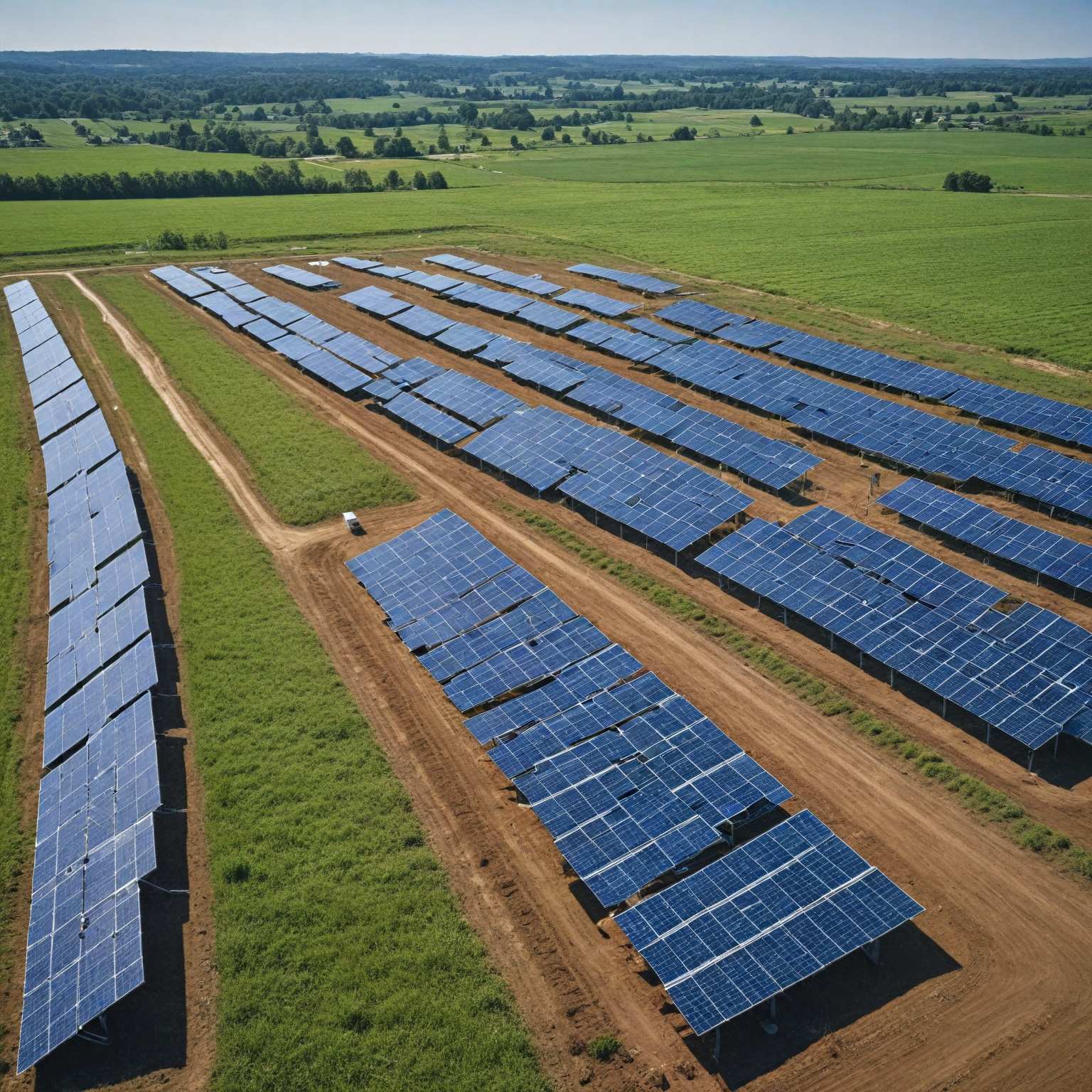
Solar plants use mainly photovoltaic (PV) and concentrating solar power (CSP) systems. PV panels directly convert sunlight to electricity and range from small residential setups to large utility farms. Global PV capacity doubled from 1 TW in 2022 to 2 TW in 2024. CSP plants, mainly in Spain and the US, use concentrated sunlight to generate thermal energy and offer thermal storage advantages. Off-grid solar supports remote areas, and smart grid technologies improve energy management and reliability.
Global Market and Major Projects
In 2024, about 240 GW of utility-scale solar and wind capacity became operational, below earlier forecasts. China dominates with 278 GW installed in 2024, more than five times the US capacity. The EU holds 66 GW, with Germany reaching 90 GW. While the number of gigawatt-scale markets increased, emerging economies remain less represented despite strong growth potential. Oversupply of PV modules and uneven political support challenge manufacturing outside China. Major projects include agrivoltaics systems and rapid expansion in countries like India, which grew solar capacity by 145% in 2024. Globally, 2023 saw record solar additions of 147 GW, with solar expected to comprise most new generation capacity soon.
Technological Advances
Advances focus on improving efficiency and integration. Perovskite solar cells combined with silicon increase energy capture. AI enhances predictive maintenance and energy forecasting. Hybrid PV and battery storage systems set new records, improving reliability and grid balancing. Agrivoltaics optimize land use by combining agriculture with solar panels, improving microclimates and dual land benefits. Advanced design software aids optimization and operational efficiency, reflecting a maturing, adaptable solar industry.
Environmental Impact and Lifecycle Carbon Footprint
Large-scale solar farms require substantial land, potentially affecting habitats and biodiversity. Impacts vary by location and design; mitigation includes siting on disturbed lands, bird-friendly panel designs, and habitat enhancements like pollinator gardens. Maintenance chemicals also pose risks. Sustainable decommissioning and recycling of materials reduce waste and carbon footprint, with manufacturing emissions offset within three years of operation. Regulatory measures balance solar expansion with environmental protection, as seen in the removal of some Solar Energy Zones to protect sensitive areas.
Economic and Operational Considerations
Solar’s declining costs improve competitiveness, especially benefiting developing countries with abundant solar resources. The top 10 markets hold 80% of installations, with emerging economies growing but still underrepresented. Operational challenges include integrating maintenance with economic and technical factors to enhance reliability and grid security. Recycling valuable materials supports sustainability. Advanced design and monitoring tools optimize plant performance, while capacity factors must be managed over time.
Future Outlook
Solar energy is set for continued growth, driven by rising demand for clean energy, technological innovation, and improved regulatory support. Developments in panel materials, energy storage, and digital infrastructure will enhance efficiency and integration. By the end of 2024, global PV capacity is expected to reach 2.2 TW, nearly half of all renewable capacity. These trends establish solar as a cornerstone of the transition to a sustainable and resilient energy future.
The content is provided by Harper Eastwood, Scopewires