
Summary of Evacuation Advisory
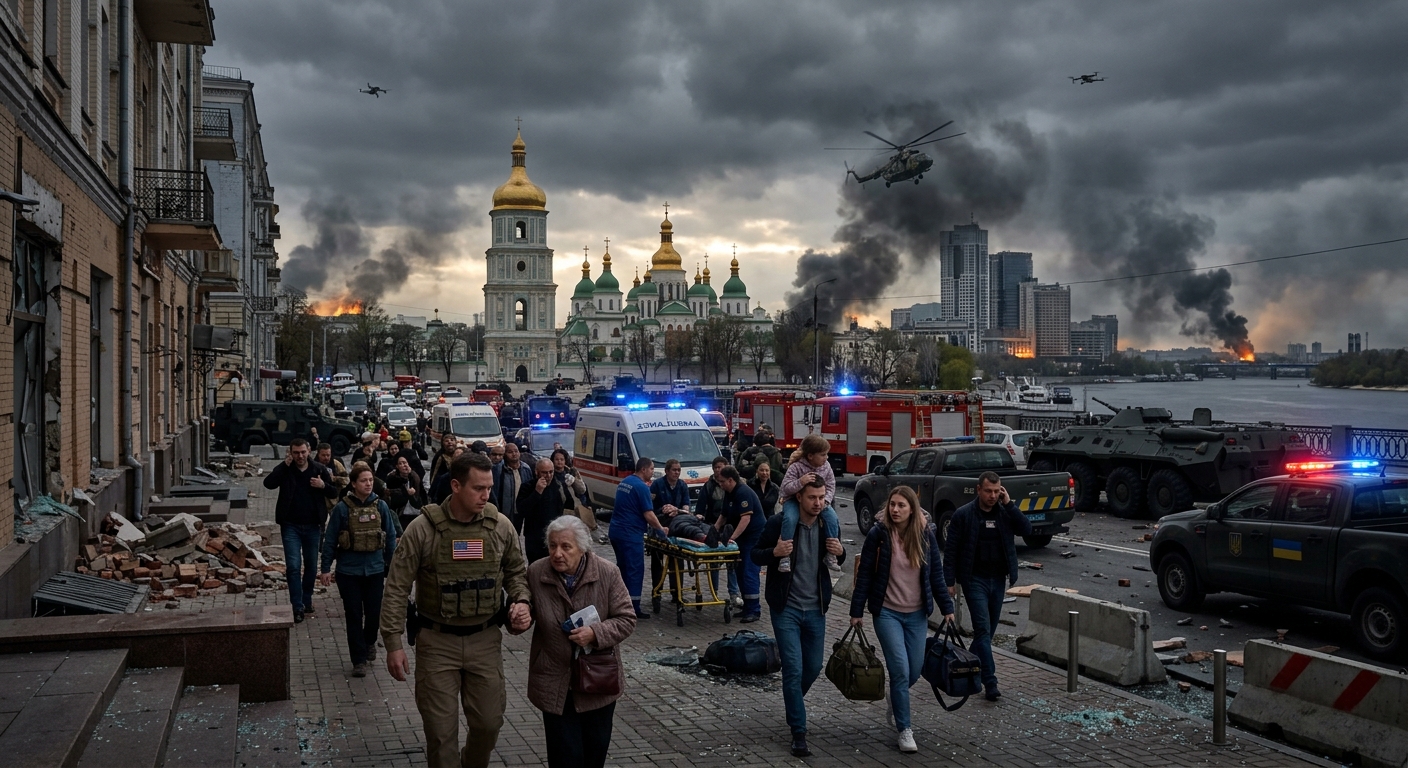
In late May 2026, Russia urged U.S. citizens and diplomatic staff to evacuate Kyiv, citing imminent “systematic strikes” targeting military and industrial sites linked to Ukraine’s defense capabilities. Russian officials framed these strikes as retaliation for a Ukrainian attack, stressing the need to avoid civilian casualties. Despite the threats, Ukrainian and Western officials dismissed the warnings as political moves, reinforcing Kyiv’s determination and resilience against the ongoing conflict.
Escalating Hostilities and Military Activity
Tensions between Russia and Ukraine have intensified significantly since 2014, culminating in large-scale military operations post-2022 invasion. The conflict has seen a notable increase in Russian troop deployment and attacks on Kyiv, while Ukrainian forces have faced continuous strikes aimed at critical infrastructure. This environment complicates diplomatic efforts, as high-level interactions have not yielded significant resolutions to the conflict or mitigated the aggressive military actions.
Details of the Evacuation Advisory
The Russian Foreign Ministry’s advisory on May 25, 2026, called for the evacuation of diplomatic personnel and foreign citizens from Kyiv, warning that missile and drone strikes would target key military sites. The advisory was issued after a series of attacks caused civilian casualties and damage. U.S. officials condemned the strikes while maintaining an active media presence in Kyiv, indicating ongoing journalistic engagement despite the risks involved.
Impact of Systematic Strikes
The Russian target of military strikes aims at specific sites across Kyiv, triggering advisories for urgent evacuation from both the Russian government and Ukrainian officials. Although effective air defense systems intercepted many projectiles, some strikes inflicted damage on civilian infrastructure, reflecting the pervasive threat posed by Russia’s military strategies. As a result, civilians face dangers, including power outages and potential casualties, prompting strong condemnation from Ukrainian authorities and the international community.
Responses to Evacuation Warnings
The responses to the evacuation advisory displayed skepticism, as many Western governments saw Russia’s warnings more as propaganda than credible threats. Ukrainian officials emphasized resistance to evacuation calls, viewing them as part of Russia’s strategy to instill fear. U.S. embassy communications suggested preparedness for potential air attacks, indicating a cautious but proactive stance in protecting citizens without succumbing to Moscow’s narrative.
International Reactions and Implications
International responses varied, with U.S. and Ukrainian officials condemning the strikes and questioning the validity of Russia’s threats. The U.S. State Department remained cautious, reflecting a complex diplomatic landscape amidst heightened tensions. Meanwhile, Russian officials framed their military actions within a broader context of perceived betrayals by the West, complicating the situation further and linking it to wider geopolitical ramifications.
The content is provided by Jordan Fields, Front Signals