
Summary
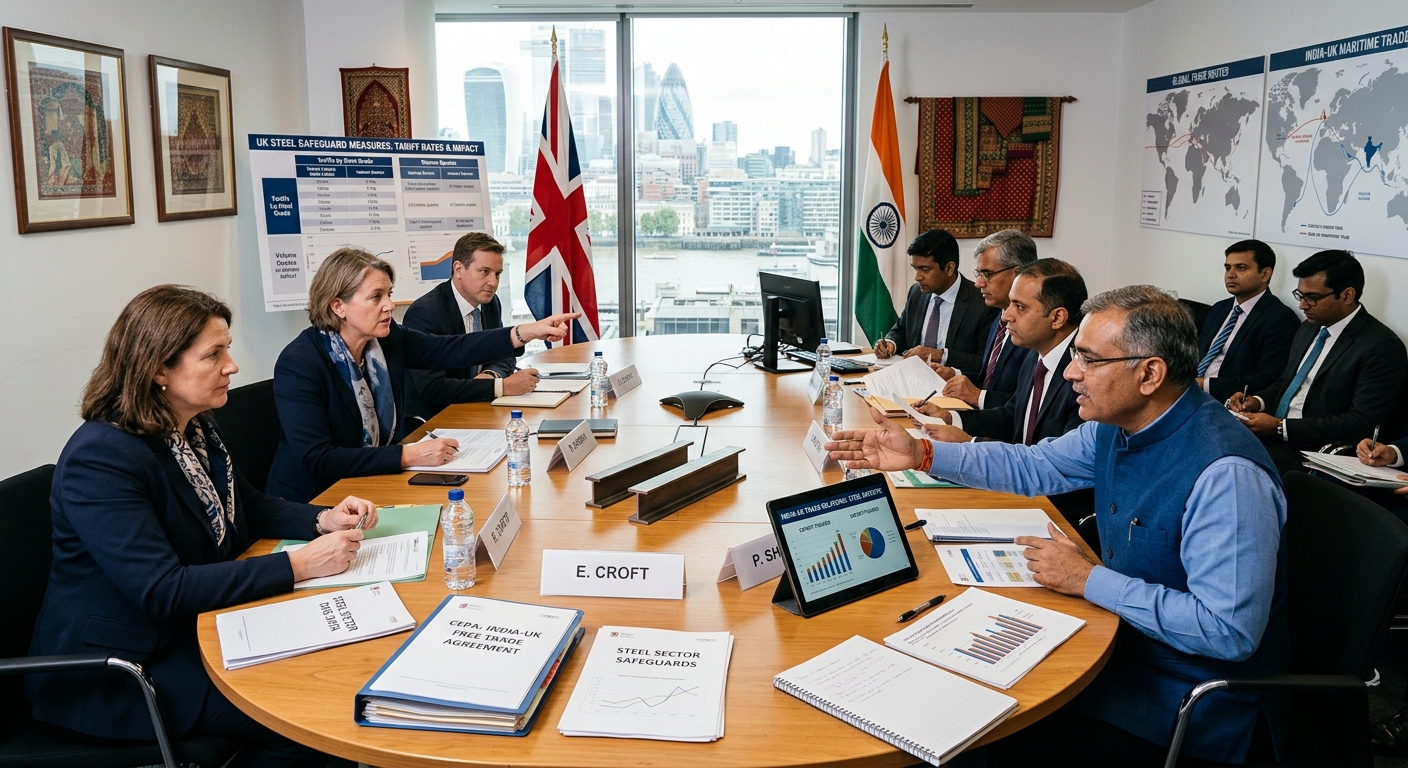
The India-UK Trade Agreement signed in July 2025 aims to deepen economic ties and facilitate tariff reductions, particularly in steel exports projected at nearly $900 million for 2025–26. However, implementation delays have arisen due to the UK’s introduction of restrictive steel safeguard measures, which cut tariff-free import quotas by 60% and impose a 50% tariff on over-quota imports starting July 2026. This has created uncertainty for Indian steel exporters, who anticipated better access under the agreement. Criticism from Indian officials highlights concerns that such measures threaten exporter confidence and contradict the trade deal’s objectives.
Additionally, the UK’s planned Carbon Border Adjustment Mechanism (CBAM) set for 2027 is perceived as another barrier, introducing potential compliance costs that could undermine the benefits of market access. The combination of steel safeguards and the CBAM has stirred significant debate on the balance between protective measures and international trade commitments.
Despite ongoing negotiations for solutions, both countries prioritize diplomacy to address these concerns while working to preserve the agreement’s broader economic benefits. This situation underscores the complexities of modern trade agreements navigating domestic protectionism and global environmental standards.
Trade Negotiation Background
Negotiations for the India-UK trade agreement began in January 2022 and included over 14 discussions on tariffs and regulations. Following the agreement’s signing in July 2025, implementation appears stalled due to new UK steel import restrictions introduced after negotiations concluded. As Indian steel exports represent a significant portion of total merchandise to the UK, these measures jeopardize expected trade benefits under the agreement.
Indian officials criticize the abrupt imposition of tariffs post-agreement as detrimental to exporter interests, and the steel dispute reflects broader trade dynamics influenced by protectionist policies and geopolitical tensions. Ongoing diplomatic efforts aim to reconcile these restrictions while advancing negotiations with other trade partners, underscoring India’s commitment to expanding its export footprint.
Current Challenges in Negotiations
The anticipated commencement of the India-UK trade agreement by May 2026 faces delays due to UK restrictions which significantly alter steel import quotas. Safeguards imposed aim to shield the UK market from competition, particularly from overproduced steel, yet create uncertainty for Indian exporters planning for enhanced market access. The situation complicates the anticipated benefits of the trade pact and raises concerns of potential trade barriers, particularly with the planned implementation of the Carbon Border Adjustment Mechanism by 2027.
Indian industry critiques the UK’s recent restrictions as undermining the operational advantages originally expected from the agreement, complicating access for critical exports. Engaging in high-level discussions, Indian negotiators prioritize resolution over immediate legal action, reflecting the complexities and sensitivities of modern trade agreements.
Reasons for Delays
The delay in operationalizing the India-UK Comprehensive Economic and Trade Agreement (CETA) primarily stems from UK steel import measures implemented post-agreement. Although the pact envisioned facilitating duty-free access for 99% of Indian exports, the new restrictions on steel threaten to diminish expected benefits, making Indian goods less competitive in the UK market.
These measures pose significant challenges since they curtail tariff-free quotas and impose tariffs that reduce market flexibility for Indian exporters. Simultaneously, the looming Carbon Border Adjustment Mechanism raises compliance concerns, further complicating export dynamics and necessitating strategic negotiations to align domestic protections with international trade goals.
Ongoing Diplomatic Efforts
Since the July 2025 agreement, the implementation has faced hurdles due to UK steel safeguards. In response, Indian officials stress the importance of maintaining dialogue to address these concerns and seek early implementation of the trade pact. Engaged in multifaceted discussions, India is also pursuing parallel trade initiatives with other strategic partners while exploring ways to manage the implications of rising carbon regulations like CBAM.
Clarity on potential measures and consistent negotiations remain critical as Indian officials work towards maintaining competitiveness and ensuring that the intended benefits of the agreement emerge without resorting to formal disputes.
India’s Export Ambitions
India aims to achieve a $1 trillion export target by 2026-27, driving this goal through strategic partnerships and trade agreements, including ongoing negotiations with the UK. Aiming to balance market access with protection for domestic industries, India navigates complex negotiations while addressing the UK’s stringent steel import restrictions and potential impacts from CBAM.
The approach entails advocating for fair treatment in safeguard policies while prompting compliance advancements among exporters to mitigate rising carbon pressures. Continued efforts to cultivate favorable trade environments with developing nations support India’s ambitions to expand its export footprint despite the current negotiating challenges.
UK’s Trade Perspective
The UK’s trade negotiations with India are heavily influenced by the necessity to protect its domestic steel industry from cheaper imports and align with environmental compliance measures. The safeguard measures, alongside the anticipated CBAM, aim to stabilize the domestic market while addressing global trade concerns about state intervention and overproduction.
These protective actions, while compliant with World Trade Organization rules, pose potential risks to the benefits expected from the FTA. As negotiations continue, the balance between domestic industry protection and broader trade relationship objectives remains a key area of focus.
Impacts of Delayed Agreement
The operational delays of the India-UK CETA due to steel safeguards and CBAM could hinder India’s export goals, particularly in steel, while introducing additional non-tariff barriers. Indian exporters face diminished market access and increased costs stemming from these protective measures, complicating efforts to meet ambitious export targets.
In light of these challenges, fostering diplomatic negotiations is deemed essential to preserving trade dynamics and addressing sector-specific issues for sustained growth. Trade experts advocate for priority discussions rather than litigations to resolve uncertainties, maintaining optimism for future trade prospects despite current setbacks.
Future Directions
The India-UK trade agreement’s future hinges on overcoming the steel import restrictions before its intended rollout. Ongoing discussions signal the commitment of both nations to find innovative solutions to these challenges, particularly in light of external pressures like CBAM that complicate export dynamics.
As negotiators prioritize constructive dialogue, the focus remains on aligning trade objectives with domestic protections, paving the way for a successful trade partnership that meets both countries’ economic aspirations while tackling emerging global trade complexities.
The content is provided by Blake Sterling, Front Signals