
Summary
Unastella is a South Korean aerospace startup focused on small satellite launch vehicles. Founded in 2024 by Jae Park, who has a background in rocket engineering, Unastella achieved a significant milestone with the launch of UNA EXPRESS-I in May 2025, validating its technology and establishing itself in the commercial space market. The startup’s innovative use of a liquid oxygen and kerosene propulsion system, along with an electric motor pump, aims to simplify design and expedite market entry. With $44 million in funding, including a recent $24 million Series B round, Unastella is positioned for further developments, including an upcoming mission to reach 100 kilometers in altitude.
Background and Market Position
Unastella operates within a competitive sector that includes international startups challenging established aerospace giants. The company’s initial goal is to provide small satellite launch services, with broader aspirations for crewed spaceflight in the future. Noteworthy partnerships with institutions like KARI and KASA enhance its technological development, while the successful launch of UNA EXPRESS-I marks its commitment to advancing South Korea’s commercial space capabilities. As the market grows, projected to triple by 2030, Unastella’s progress is crucial for integrating within both national and international aerospace ecosystems.
Funding Overview
Unastella has raised a total of $44 million since its inception, with significant backing from investors like Altos Ventures and Korea Development Bank. Recent funding rounds demonstrate strong investor confidence in the company’s vision despite its current lack of revenue. This financial support is essential for advancing ongoing projects like the UNA EXPRESS-II launch, which is key to establishing Unastella’s presence in the space tourism market and achieving its objectives.
Launch Success
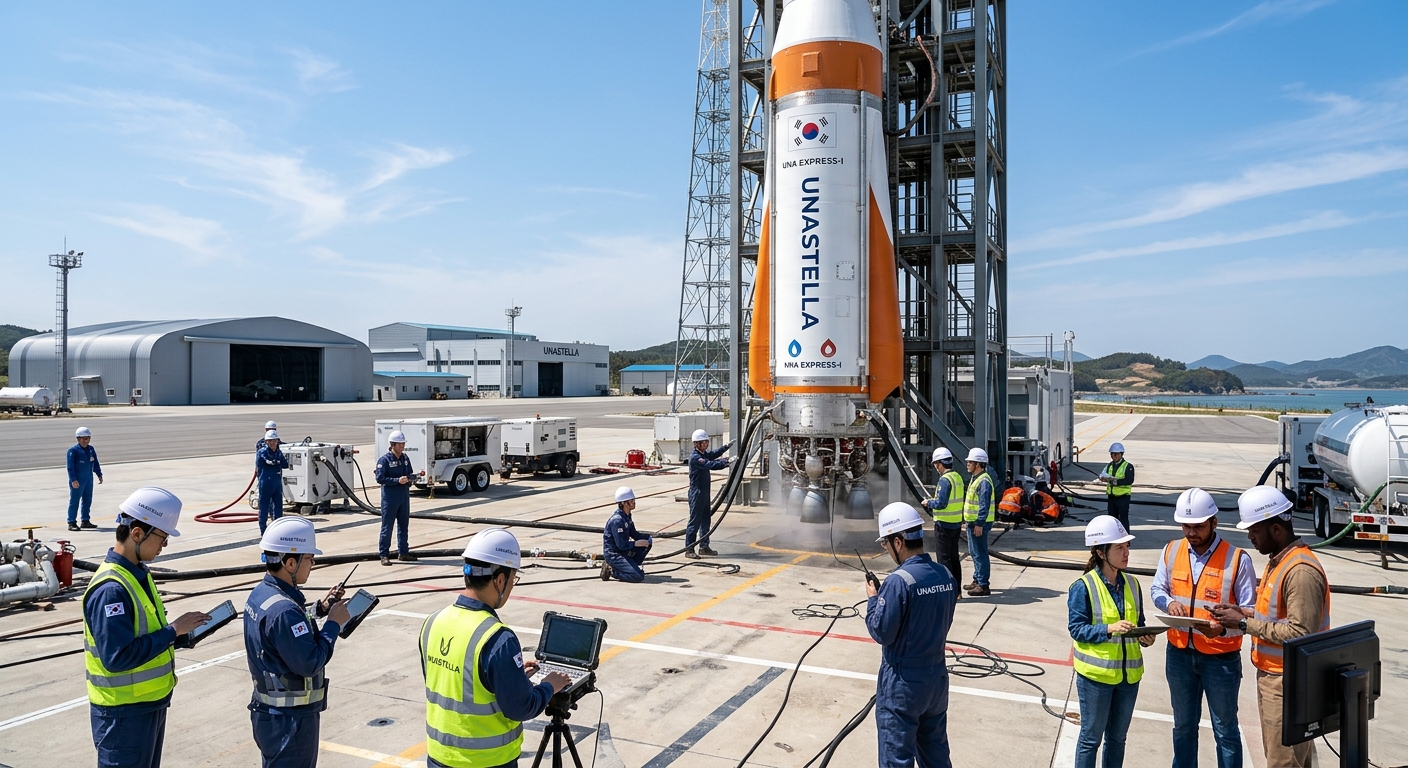
The launch of UNA EXPRESS-I in May 2025 was a major achievement for Unastella, demonstrating its technological capabilities and commitment to the commercial space sector. This event marked one of South Korea’s notable private rocket successes, validating the company’s in-house development strategies and potential for future launches. As Unastella prepares for UNA EXPRESS-II, targeting a 100-kilometer altitude, the company continues to build credibility and foster partnerships in the industry.
Technological Innovation
Unastella’s approach involves in-house development of its rocket systems, including propulsion technologies. The adoption of an electric motor pump in place of traditional turbopumps is a significant innovation, allowing for cost-effective operation despite trade-offs in payload capacity. This strategy, alongside collaborations with KARI and other entities, enhances its engineering capabilities, while the successful full system test during the UNA EXPRESS-I launch reinforces its readiness for future endeavors.
Challenges in the Industry
As an emerging player, Unastella faces typical hurdles such as ongoing investments in technology and ensuring safety while maintaining a rapid development pace. The lack of profitability is a concern among investors, even as confidence in Unastella’s direction remains strong. Navigating competition from established space players presents another challenge; demonstrating reliability in technology and securing strategic partnerships are critical for building investor trust and achieving long-term success.
The content is provided by Sierra Knightley, Front Signals