
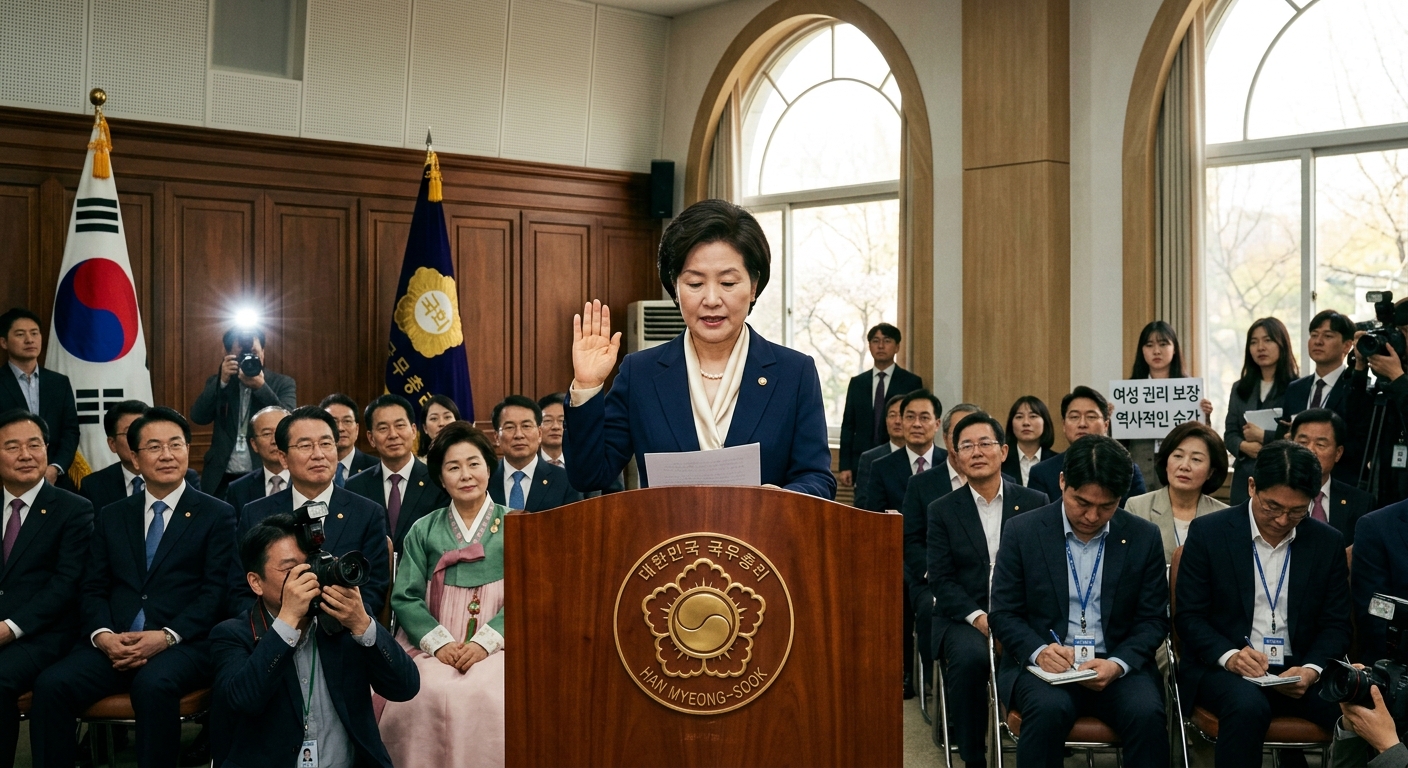
Historical Significance
Han Myeong-sook’s appointment as South Korea’s first female prime minister in 20 years was a groundbreaking event in a male-dominated society. Her swearing-in on April 20, 2006, represented a significant step toward gender equality and challenged traditional barriers within the political landscape. This shift highlights evolving attitudes and broader acceptance of women in leadership roles, reflecting the potential for social change inspired by female political representation.
Political Career Overview
Han Myeong-sook’s career is defined by her commitment to democratic values and gender equality. She began as a social activist during South Korea’s authoritarian era and became a foundational member of President Kim Dae-jung’s party, serving as the inaugural Minister of Gender Equality and Family in 2001. Her role as prime minister, though brief, was pivotal in supervising government ministries and promoting gender-inclusive policies, emphasizing the need for increased representation in South Korea’s political system.
Gender Barriers and Challenges
Despite advancements, South Korea continues to face significant gender barriers in politics. Discrimination limits the number and scope of female appointments, with systemic biases affecting representation in government. The Ministry of Gender Equality and Family, which Han helped establish, has been crucial for supporting women in politics but faces potential abolition, raising concerns among advocates for women’s rights.
Role of the Prime Minister
The South Korean prime minister acts as the deputy head of government, assisting the president in ministry oversight and policymaking. This role includes the constitutional ability to assume presidential duties if needed, providing continuity in governance. As a key figure within the cabinet, the prime minister influences appointments that affect political dynamics and representation across gender lines.
Current Developments and Future Implications
Han Seong-sook’s recent nomination as prime minister by President Lee Jae Myung underscores the historical significance of female leadership in South Korea. If confirmed, she will not only succeed Han Myeong-sook but also continue addressing gender disparities within governance. This nomination is framed around competence, signifying an ongoing shift towards meritocracy and inclusion in political roles within the country.
Legacy and Continued Relevance
Han Myeong-sook’s impact on political dynamics in South Korea persists, particularly in the context of increasing female representation. Her tenure and the establishment of supportive institutions like the Ministry of Gender Equality and Family laid foundational groundwork for future female leaders. As discussions about gender equality evolve, her legacy serves as a reference point for ongoing efforts to address systemic issues and promote inclusivity in politics.
The content is provided by Avery Redwood, Front Signals