
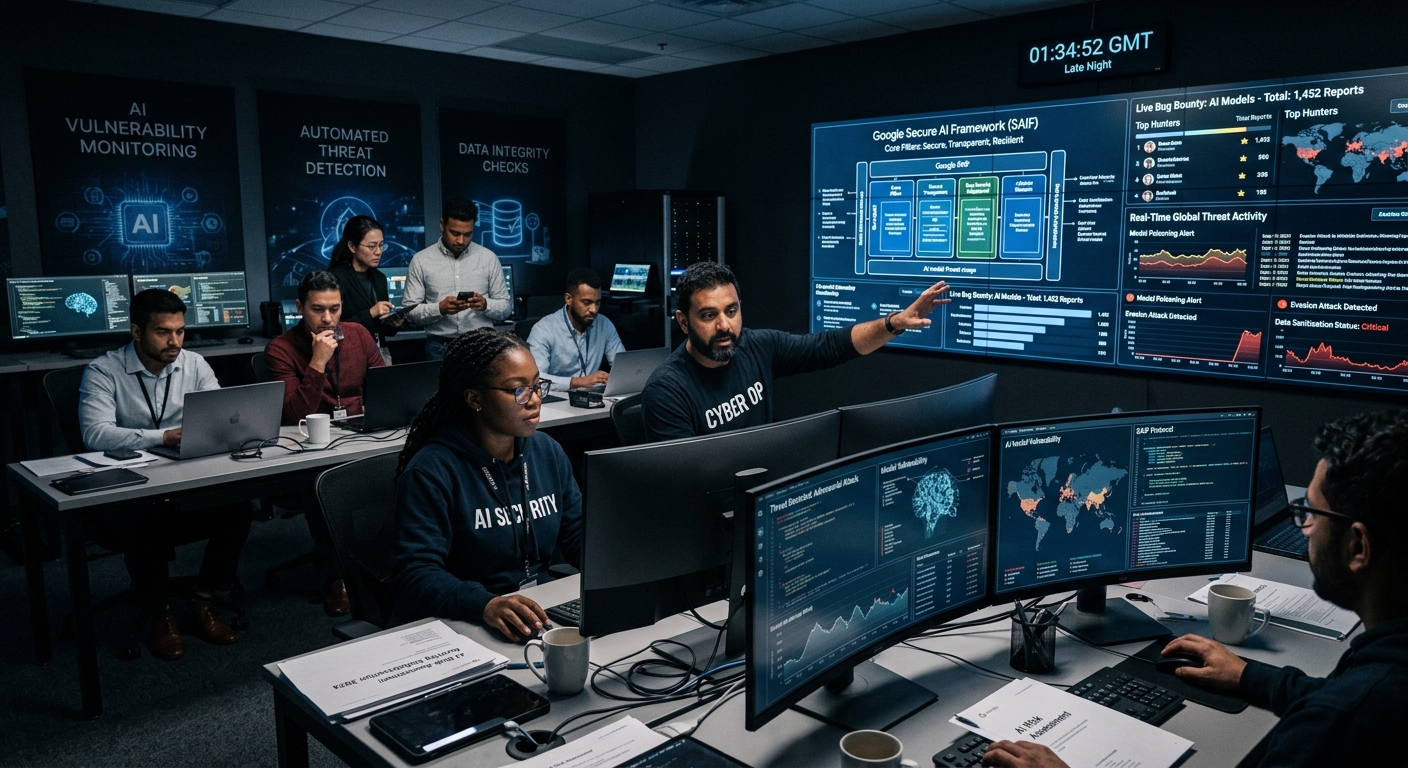
AI Security Overview
AI security protects AI systems—encompassing their data, models, algorithms, and infrastructure—from various threats, such as adversarial attacks, data poisoning, and supply chain vulnerabilities. As AI technologies advance, particularly generative AI, they introduce new risks that challenge traditional cybersecurity measures. The rise of autonomous malware and AI-driven exploits complicates the security landscape, requiring proactive measures to enhance reliability and safety across industries.
Key Challenges in AI Security
Protecting AI components from adversarial attacks and data poisoning remains a primary challenge. These attacks manipulate AI models and can degrade their performance, creating potential risks in reliability and trustworthiness. Continuous development of adaptive defenses and maintaining high-quality training data is essential to combat these threats effectively.
Additionally, supply chain vulnerabilities present a significant challenge as attackers sometimes compromise software dependencies, making it crucial to secure every stage of the AI development pipeline. Organizations must also contend with the rapid evolution of attack techniques, necessitating continuous updates to security models and cross-functional teams to maintain effective risk management.
Industry Adaptations to Security Threats
The AI security landscape is evolving rapidly. Major companies like Google and Anthropic are focusing on collaborative initiatives and partnerships to enhance AI system security. For instance, Google’s Bug Bounty program incentivizes global researchers to identify vulnerabilities, while collaborations like Anthropic’s Project Glasswing involve tech giants working together to safeguard AI infrastructure against potential threats.
The introduction of security frameworks, such as Google’s Secure AI Framework (SAIF), is also vital for standardizing approaches to AI design and implementation. Such frameworks guide organizations in promoting continuous monitoring and controlled access in AI development to bolster security measures.
Real-Time Response Mechanisms
Organizations use real-time response mechanisms to address AI-driven cyber threats effectively. Continuous monitoring systems track AI workflows for unauthorized actions, while AI-powered cybersecurity tools automate threat detection and mitigation. Advanced detection models actively analyze behaviors to identify and respond to threats, enhancing overall incident response effectiveness.
Emerging AI Security Threats
AI technology has introduced new vulnerabilities, such as adversarial AI and data poisoning, necessitating sophisticated defense strategies. AI-assisted zero-day exploits and malware that dynamically adapt to evade detection pose significant risks. Additionally, prompt injection tactics enable adversaries to manipulate AI systems, highlighting the need for ongoing evaluation and development of security measures.
Government and Regulatory Involvement
Governments are collaborating with industry leaders to create frameworks addressing AI security risks. Partnerships with organizations like NIST help develop regulatory standards that guide AI system oversight, ensuring alignment with social responsibility and compliance concerning human rights. Enhancing software supply chain integrity and implementing secure architectures are among essential recommendations for organizations to follow in order to strengthen AI system resilience.
Future Innovations in AI Security
Future trends focus on adaptive, real-time defenses integrated throughout the AI lifecycle. Organizations are prioritizing “secure by design” principles to address risks from early development through deployment. Continuous updates to security models and collaboration between industries and governments are expected to shape AI security, fostering innovation while ensuring safety and privacy protections.
Furthermore, leveraging AI technology itself can enhance security measures and a deeper understanding of challenges, promoting the development of innovative solutions that benefit society while minimizing risks. As AI evolves, maintaining a balance between advancement and security will remain crucial.
The content is provided by Blake Sterling, Front Signals