Summary
On April 25, 2026, a gunman, identified as 21-year-old Nasire Best, opened fire near a White House security checkpoint during the White House Correspondents’ Dinner. The United States Secret Service reacted quickly, fatally wounding Best and ensuring the safety of all protectees, including the President. Best, who had a history of mental health issues and prior encounters with law enforcement, was believed to have targeted government officials, though the full motive is still under investigation. The incident has reignited discussions on the evolving threat landscape and the effectiveness of current security measures at high-profile political events.
Incident Overview
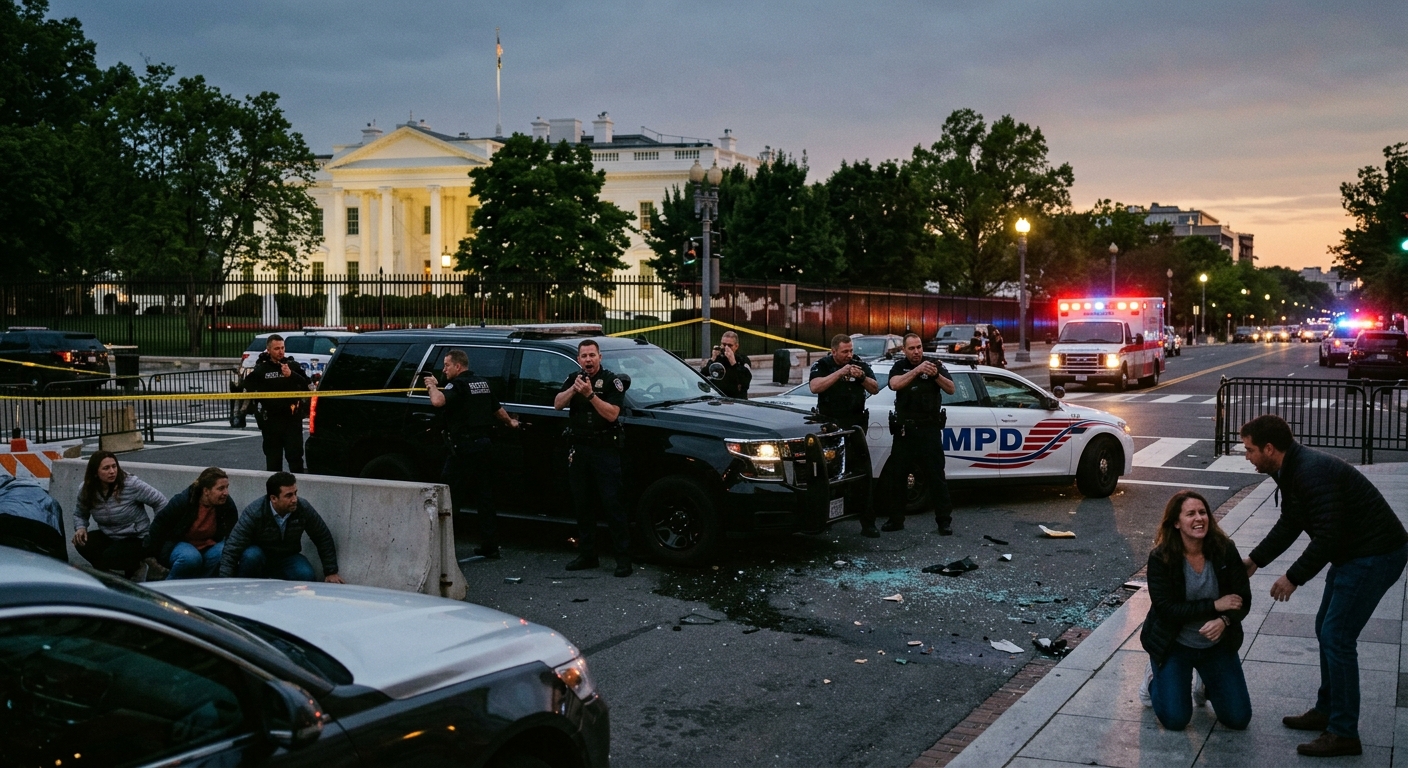
The shooting incident occurred near 17th Street and Pennsylvania Avenue NW, just outside the White House complex. Responding swiftly, the Secret Service secured the area and confirmed that all protectees were safe. This incident raises critical questions about security effectiveness, especially following similar attacks in recent years, such as an ambush on National Guard members in November 2025. It highlights the urgency for continuous improvement in security protocols to adapt to rising threats and ensure protection at significant events.
Perpetrator
Nasire Best, the shooter from Maryland, was known to law enforcement for previous unlawful entry attempts at the White House, demonstrating patterns of concerning behavior linked to his mental health. After the altercation, he succumbed to his injuries at the hospital. Investigators are exploring the potential focus of his attack, leading to concerns about similar threats to government officials, including the president.
Law Enforcement Response
In response to the gunfire, Secret Service personnel acted decisively, neutralizing the threat without injuries to agents or the President. Despite the chaos and a bystander being wounded, law enforcement succeeded in managing the scene effectively, reflecting the capabilities of the current protective measures. This incident underscores the necessity for ongoing enhancements in security protocols, especially in light of rapidly changing threat levels.
Security Protocols at the White House
The security at the White House involves a comprehensive set of measures, including advanced surveillance, physical barriers, and thorough identity checks at access points. However, lapses can occur, as evidenced by previous unauthorized entries, which underline the challenges the Secret Service faces in maintaining strict access controls. High-profile events see intensified efforts to manage security, but recent attacks emphasize the importance of evolving protective strategies to adapt to threats that continue to rise.
Investigation
Following the shooting, a rapid investigation began, highlighting potential motives linked to targeting government officials based on evidence collected. Scrutiny of security protocols has led to renewed calls for accountability and assurance of safety measures, given past lapses. Law enforcement is diligently reviewing evidence and compiling information as the investigation develops, reflecting an ongoing commitment to uncovering the full circumstances surrounding the attack.
Aftermath and Impact
The incident prompted immediate lockdown measures in and around the White House, ensuring the safety of all present, while also drawing attention to existing security protocols. Although the Secret Service affirmed the effectiveness of their response systems, the event has catalyzed discussions on the need for continual improvements to safeguard such high-stakes environments against potential future threats. The quick response by law enforcement is a focal point for evaluating the adequacy of protective measures at public gatherings.
Legislative and Policy Implications
This attack has spurred intensified legislative dialogue focused on political violence and gun control, with various measures under consideration to address the roots of such threats. The political landscape reflects divisions on how to manage security reforms, indicative of wider societal debates about gun rights and violence. Responses from lawmakers emphasize a unified stance against political violence while navigating differing perspectives on proposed security regulations.
Related Incidents and Historical Context
The shooting is a continuation of a troubling trend in political violence targeting significant figures in the U.S. The Secret Service faces increasing pressure to adapt its strategies in response to evolving threats, as evidenced by recommendations from past evaluations aimed at enhancing operational capabilities. The response after the incident reinforces the critical importance of effective security measures at events involving high-profile officials, while also highlighting the divisive interpretations of these events across the political spectrum.
The content is provided by Sierra Knightley, Front Signals