
Summary
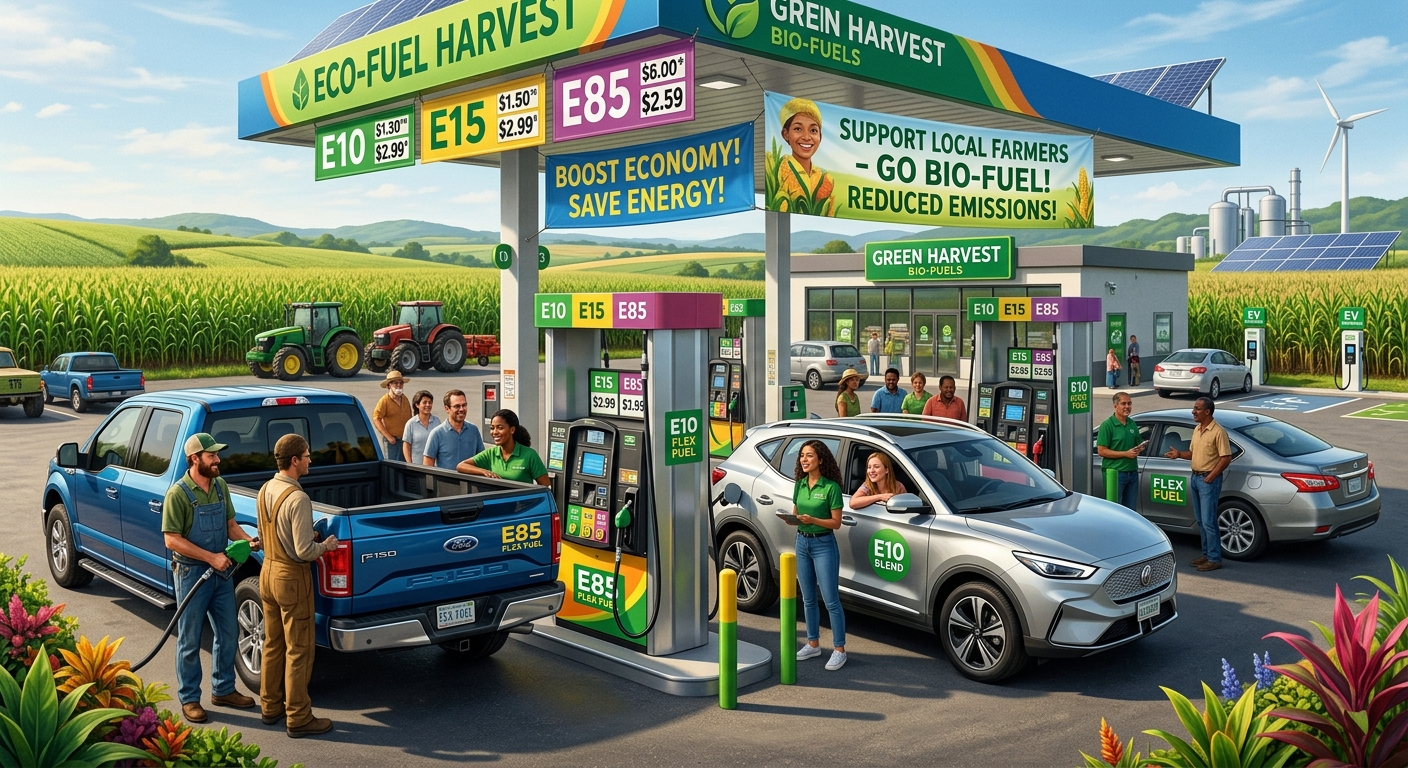
Unlocking Billions: How the Government is Revolutionizing Fuel Savings with Ethanol-Blended Petrol details the strategic promotion of ethanol-blended fuels to enhance energy security, diminish greenhouse gas emissions, and uplift rural economies. Ethanol blending—mixing conventional petrol with bioethanol derived from plants—helps to decrease fossil fuel dependency and reduce environmental impacts. Countries like India and the U.S. have set specific blending mandates, such as E10 (10% ethanol) and E15 (15% ethanol), facilitating a market for vehicles compatible with higher ethanol concentrations like E85.
Government initiatives have propelled ethanol blending, with India surpassing its 10% ethanol target ahead of schedule, yielding significant savings in crude oil imports and generating substantial economic advantages for farmers. U.S. policies like the Renewable Fuel Standard and tax incentives promote the growth of the ethanol market, creating jobs and bolstering energy independence. While ethanol blending offers benefits, challenges such as reduced fuel economy, the “food vs. fuel” debate, and price volatility remain essential to consider for a sustainable future.
Benefits and Challenges
Ethanol blending aids in reducing reliance on petroleum, providing a renewable alternative. Yet, its adoption can lead to technical challenges. Ethanol’s lower energy density may result in reduced fuel economy, particularly in older engines, while potential compatibility issues in fuel systems can arise, affecting performance and reliability.
Environmental impacts are a two-edged sword. Ethanol helps diminish greenhouse gas emissions significantly, with studies showing substantial life-cycle emission reductions. However, agricultural practices for ethanol production risk land use changes and resource depletion if not managed sustainably, creating a need for responsible policies to balance agricultural and environmental needs.
Economic Implications
The economic impacts of ethanol-blended fuel are significant, particularly in countries like India and the U.S. where government initiatives have spurred growth in this sector. In India, early achievements in blending have led to substantial foreign exchange savings and promises to further enhance economic benefits as targets are raised. Similarly, in the U.S., the expansion of ethanol availability can bolster rural economies and generate jobs, signaling a shift towards energy independence and a stronger agricultural base.
However, complexities remain, especially in pricing. The challenge lies in ensuring that ethanol production remains economically viable for both producers and consumers, particularly in light of raw material price fluctuations and the costs associated with blending and infrastructure upgrades.
Government Initiatives
Government policies are crucial in steering the expansion of ethanol-blended petrol. The Renewable Fuel Standard in the U.S. mandates blending renewable fuels into the transportation sector, promoting increased production and consumption of ethanol while providing various tax incentives to fuel blenders. Similar initiatives exist in India, where steps taken towards enhancing blending continue to evolve alongside technological advancements in agriculture and fuel processing.
Infrastructure development is another significant focus, as government incentives promote modernization necessary for accommodating higher ethanol blends. The collaboration between public and private sectors is pivotal in fostering infrastructure growth, crucial for meeting future energy demands and ensuring efficient distribution of renewable fuels.
Future Prospects and Sustainability
Looking ahead, both India and the U.S. set ambitious targets for ethanol blending, with ongoing evaluations essential for maintaining momentum and ensuring market acceptance. Innovations in biofuel technology, particularly second- and third-generation ethanol sourced from non-food plants, hold promise for enhancing sustainability and addressing critical food security issues. Achieving these goals will require concerted efforts in logistics, consumer education, and regulatory support to navigate any emerging challenges associated with ethanol adoption.
Balancing the advantages of ethanol fuels against the environmental and economic trade-offs is crucial for long-term viability. Ensuring that policies foster sustainable practices while bolstering energy independence will be vital as the global community pivots toward cleaner energy solutions.
The content is provided by Harper Eastwood, Front Signals