
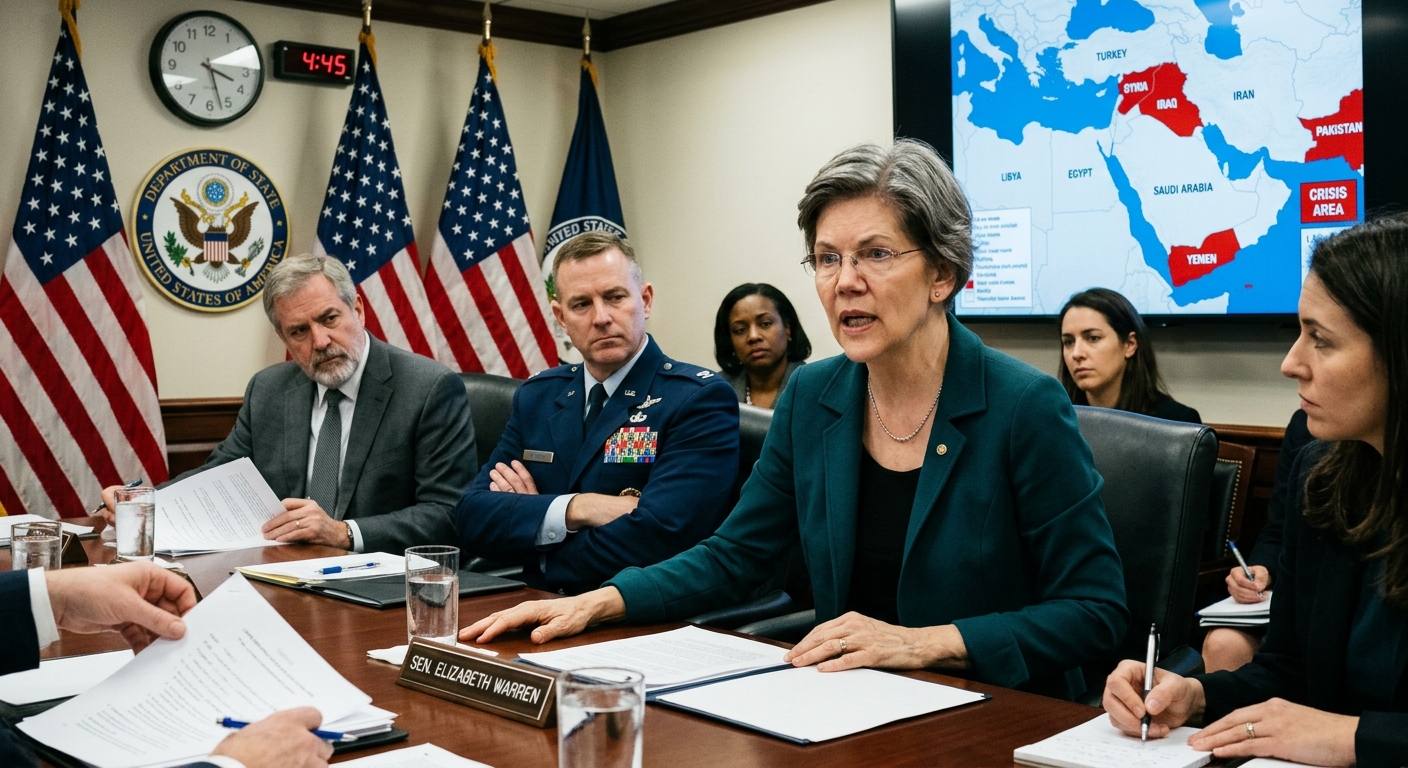
Summary of Evacuation Controversy
The recent controversy surrounding the State Department’s handling of evacuations from the Middle East centers on its collaboration—or lack thereof—with the U.S. Transportation Command (TRANSCOM) during the 2023-2026 conflicts. Despite TRANSCOM’s established logistical capabilities for large-scale evacuations, Senator Elizabeth Warren highlighted gaps in its engagement, particularly regarding private American citizens stranded amid escalating violence involving Iran and Israel. Conflicting reports emerged during Senate hearings, revealing critical miscommunication and operational shortcomings between federal agencies, which potentially left many Americans in precarious situations.
Background of the Crisis
Escalating conflicts in the Middle East prompted significant U.S. evacuation efforts in late 2023 and early 2024, during which TRANSCOM managed the logistics necessary to relocate approximately 124,000 individuals. However, communication issues surfaced, introducing confusion among American citizens while seeking to evacuate. Senator Warren urged clearer interagency cooperation between the State Department and TRANSCOM, stressing the implications of mixed signals on emergency preparedness and response.
Timeline and Key Events
The U.S. military intensified its presence in the Middle East in 2026, amidst rising tensions involving several nations and the closure of critical trade routes. In October 2023, the surprise attack by Hamas triggered large-scale military operations that affected evacuation plans for American citizens. Notably, while TRANSCOM played a significant role in supporting evacuation logistics, inefficiencies arose as the State Department did not deploy TRANSCOM’s full capabilities in a timely manner to assist with non-governmental evacuations. This oversight led to scrutiny regarding the adequacy of government response during the crisis.
Senator Warren’s Findings
Senator Elizabeth Warren’s inquiries unveiled discrepancies in the evacuation efforts, particularly regarding TRANSCOM’s involvement with citizens unaffiliated with the State Department. While TRANSCOM confirmed its capability to assist, it was reportedly not formally tasked to evacuate private citizens. Warren’s calls for clarity intensified as she identified significant flaws in proactive planning and coordination that ultimately impacted many Americans looking for assistance.
Operational Challenges Between State Department and TRANSCOM
The interplay between the State Department and TRANSCOM revealed significant barriers during the evacuation process. TRANSCOM’s assistance followed only formal requests, and a lack of clear procedural frameworks resulted in confusion and stranded citizens. Reports of misinformation and inadequately directed resources led to frustration among U.S. nationals seeking aid, prompting urgent discussions around the necessity for improved coordination during crises.
Analysis of Evacuation Operations
Recent evacuations underscored the complexities of interagency cooperation, with TRANSCOM traditionally tasked with providing logistical support during international emergencies. However, failures to activate TRANSCOM for key civilian evacuations highlighted weaknesses in procedural planning. The absence of clear communication channels limited effective resource utilization, impacting the safety and security of American citizens abroad amidst rising conflict.
Public and Political Reactions
Warren’s public criticisms of the evacuation response focused on the perceived inadequacies of the Trump administration, emphasizing failures in protecting Americans and facilitating timely evacuations. Misalignment between official statements and on-the-ground realities added to public frustration, showcasing the need for transparent and responsive crisis management strategies. Her advocacy for clarity and better synchronization between military and civilian efforts reflects broader concerns regarding effective emergency preparedness.
Influencing Factors in Response Coordination
An essential factor influencing the response to evacuations involved interagency coordination. Without formal tasking, TRANSCOM’s capabilities were underutilized, leading to operational limitations that affected decision-making during the crisis. The intricate nature of conducting evacuations in hostile environments necessitates a well-coordinated approach, underscoring the importance of establishing clear communication pathways between agencies to enhance response effectiveness.
Challenges and Historical Context
Controversies surrounding TRANSCOM’s role reveal challenges in facilitating effective evacuation operations. Despite previous successful evacuations, lack of proactive engagement by the State Department during the recent crisis raised concerns about governmental preparedness. The historical reliance on military support for civilian evacuations highlights the necessity of integrating both civilian and military resources to ensure responsiveness and safety for American citizens in crisis circumstances.
The content is provided by Blake Sterling, Front Signals