
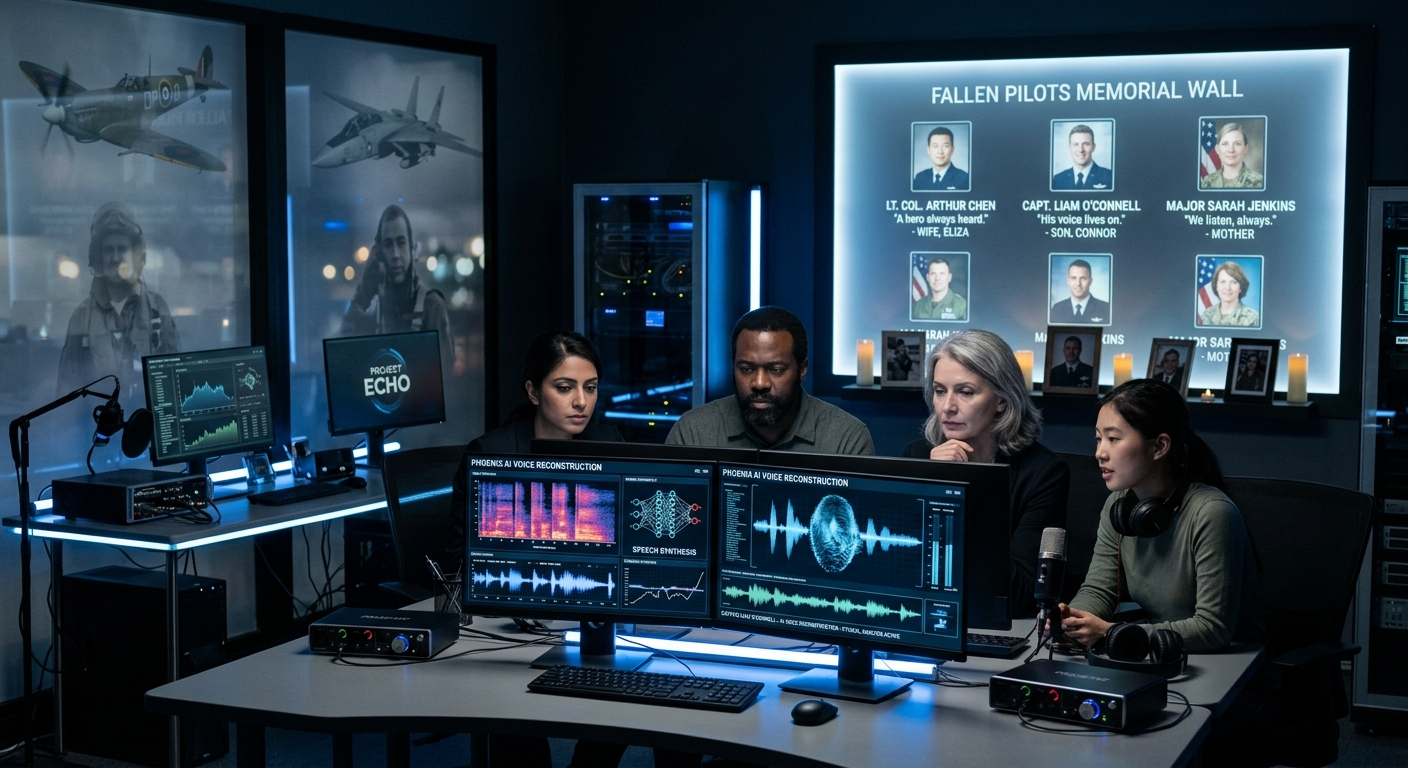
Reviving Voices Using AI
The use of artificial intelligence (AI) to recreate the voices of deceased pilots raises fundamental questions about data transparency, privacy, and ethical considerations. Following the 2025 crash of UPS Flight 2976, AI-generated approximations of pilot conversations surfaced online, revealing vulnerabilities in regulatory practices concerning sensitive information. This incident led to a suspension of public access to certain aviation investigation materials by the National Transportation Safety Board (NTSB), underscoring a need for stricter governance as AI technology advances.
Technological Breakthroughs
Recent advancements in AI have enhanced voice synthesis capabilities, allowing the recreation of speech from degraded audio data. Utilizing spectrograms—visual representations of sound waves—individuals can approximate pilot voices by employing deep learning models and algorithms like Griffin-Lim. This technology enables the interpretation of complex audio signals, resulting in highly realistic vocal recreations that reflect the original speakers’ tone and urgency.
Potential Applications
The implications of AI voice reconstruction extend into accident investigations and memorialization. By generating intelligible speech from spectrograms, AI not only aids safety analyses but also allows for interactive experiences in memorials and historical presentations. However, the potential for misuse in sensitive areas necessitates the development of legal frameworks to protect individuals and ensure ethical applications in commercial and entertainment contexts.
Ethical and Legal Challenges
Reviving deceased voices through AI raises significant ethical and legal dilemmas regarding consent and intellectual property rights. Current laws in the United States lack robust protections for posthumous voice replication, creating uncertainty about ownership. Proposals such as digital wills aim to clarify the rights of individuals and their families concerning voice usage after death, highlighting the need for updated regulations to navigate the complexities of voice synthesis technology responsibly.
Case Studies and Impact
The case of UPS Flight 2976 illustrates the tensions between advancing AI capabilities and regulatory frameworks. The unauthorized use of AI to reconstruct pilot voices from publicly released spectrograms prompted the NTSB to restrict access to sensitive data, revealing the risks associated with AI’s interaction with sensitive information. This incident underscores the need for thoughtful approaches to data governance in light of rapidly evolving voice synthesis technologies.
Future Directions
The future of AI voice synthesis intersects with ongoing discussions about safety, legality, and ethical use. As technology evolves, laws must adapt to address issues surrounding consent and the commercialization of digital likenesses. Engaging stakeholders across industries is vital for navigating the challenges and ensuring that advancements respect individual rights and memories, with an emphasis on maintaining public trust in AI technologies.
The content is provided by Harper Eastwood, Front Signals