
Industry Transformation and Supply Chain Challenges
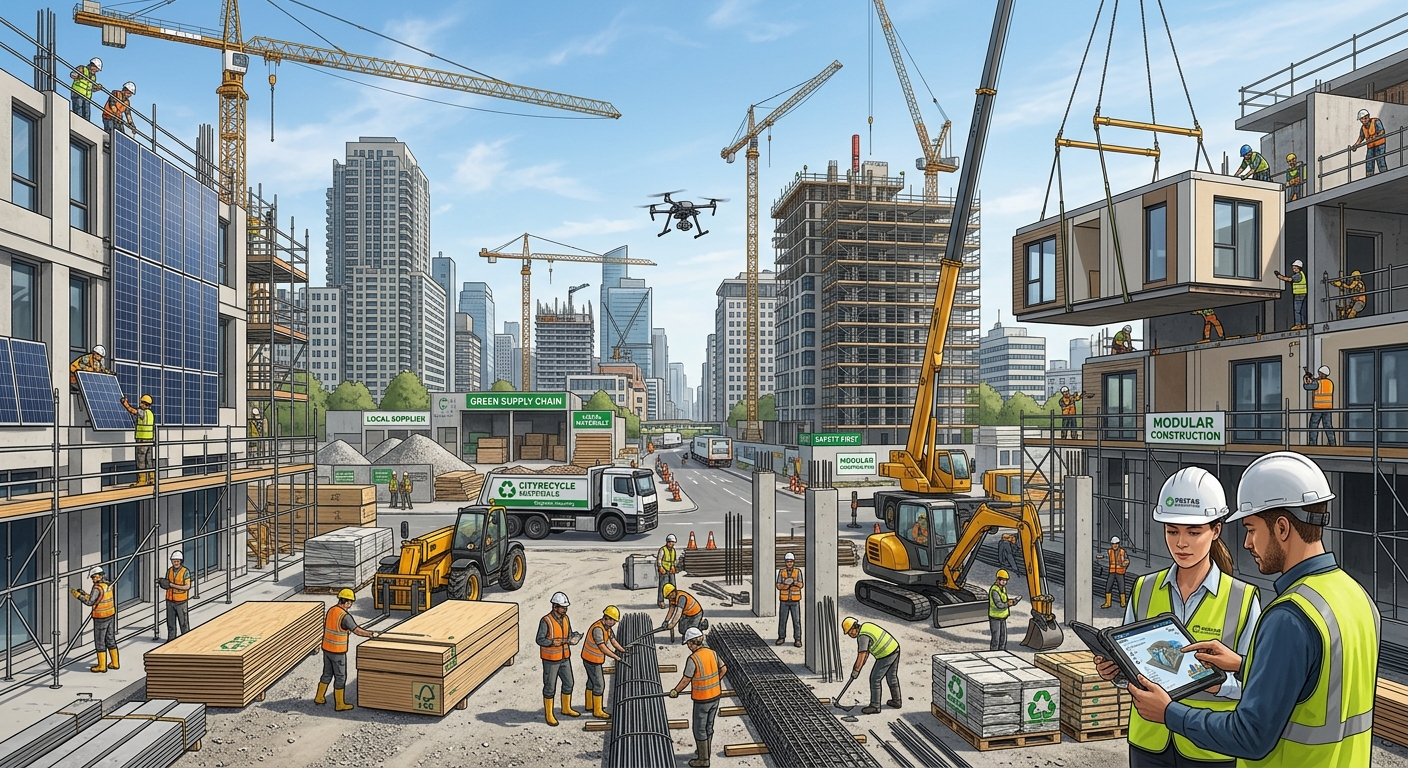
The construction industry is facing significant transformations, primarily driven by challenges in supply chain management, including material volatility and the aftermath of global disruptions. The COVID-19 pandemic and geopolitical issues have made material availability unpredictable, complicating project budgets and timelines. As a result, firms are now shifting towards regional sourcing and advanced digital tools, such as AI and digital twins, to improve resilience and operational efficiency.
Material Costs and Availability
The volatility in material prices, particularly for lumber and steel, poses serious budgeting challenges for construction projects. Current trends indicate an increasing reliance on modular construction and eco-friendly building materials to combat these issues. Utilizing innovative products reduces environmental impact while enhancing financial performance in the long term.
Technological Integration in Supply Chains
Technological advancements are crucial for evolving supply chain management strategies. Digital tools enable enhanced visibility and efficiency, helping firms manage complex logistics and mitigate risks effectively. Tools like AI and data analytics support real-time decision-making, empowering companies to quickly adapt to market changes.
Regional Sourcing Strategies
The shift towards localized sourcing practices is gaining momentum as firms aim to reduce reliance on distant suppliers. This adaptation promotes sustainability through reduced transportation emissions and resonates with circular economy principles. Enhanced collaboration with local suppliers fosters reliability and supports regional economies.
Sustainable Materials and Innovations
Innovation in sustainable materials is reshaping construction practices, targeting reduced carbon footprints and energy-efficient solutions. Advanced production techniques, like 3D printing, are transforming how materials are manufactured, although challenges remain in scaling novel products economically. This focus on sustainability not only meets regulatory requirements but also enhances project viability over time.
Supply Chain Resilience Tactics
To navigate existing and future disruptions, firms are adopting multifaceted resilience strategies that involve diversifying suppliers and utilizing technology. Establishing strong partnerships with subcontractors improves accountability and quality, while centralized logistics platforms enhance real-time supply chain management. These strategies provide firms with the agility needed to adjust to unforeseen challenges.
Future Industry Outlook
The outlook for construction suggests cautious optimism as the industry adapts to ongoing challenges and shortages. Economic indicators remain mixed, with inflation and supply chain constraints impacting project timelines. However, technology adoption and sustainability are expected to enhance resilience, positioning firms for success even amid uncertainties in the market.
The content is provided by Jordan Fields, Front Signals